The Government Sent Her Widow's Benefits for Two Decades. Her Husband Was Alive the Whole Time.
The Letter That Started Everything
Eleanor Marsh — not her real name, but close enough to the one that appears in the administrative records — was not expecting anything unusual when a government envelope arrived at her home in the spring of 1971. Her husband, a Korean War-era veteran, had recently separated from the military after more than a decade of service. Paperwork, she assumed. Benefits information, maybe. Something routine.
What she found inside was a letter of condolence.
The Department of Veterans Affairs, the letter explained, had received notification of her husband's death. The agency wished to express its sympathies and inform her that, as his surviving spouse, she was entitled to a monthly survivor's pension. Instructions for claiming the benefit were enclosed.
Eleanor read the letter twice. Then she called her husband, who was at that moment alive and well and apparently unaware that the federal government had declared him dead.
How a Discharge Became a Death
The mechanics of the error, reconstructed later through administrative review, were straightforward in the way that only truly absurd mistakes can be. Military discharge paperwork and death notification forms, in the records processing system of that era, passed through the same routing department. Both required similar handling — verification, filing, and downstream notification to the relevant benefits agencies.
Somewhere in that chain, a clerk had routed the wrong document to the wrong destination. Her husband's discharge form — confirming he had left active duty alive and in good standing — was coded and filed as a death notification. The actual death notification form it was confused with belonged to another veteran whose paperwork had arrived around the same time.
The error propagated downstream automatically. The VA received the misrouted notification, processed it as a confirmed death, and opened a survivor's benefit case for Eleanor. The system, functioning exactly as designed, did everything right. The input it was working from was simply wrong.
Why She Didn't Report It Immediately
This is the part of the story where most people pause and ask the obvious question. And the honest answer, based on accounts Eleanor later gave to investigators, is more complicated than it first appears.
She did, initially, try to report it. She called a VA regional office and explained the situation. She was told to submit a written correction request with supporting documentation. She submitted it. She received an acknowledgment letter. And then — nothing. The benefits continued arriving. A follow-up call produced another acknowledgment. More nothing.
At some point in the mid-1970s, after several rounds of attempted correction that produced no discernible result, Eleanor made a decision that is probably easier to understand than to defend: she stopped trying. The money wasn't enormous — survivor's pensions in that era were modest — but it wasn't nothing, either. And the government, despite her attempts to alert it, seemed determined to keep sending it.
Her husband, meanwhile, had relocated for work. The couple's relationship had ended not long after his discharge — a casualty of the readjustment difficulties that affected many veterans of that era. He was, in a practical sense, no longer part of her daily life. The fact that the government believed him dead was, from her perspective, increasingly someone else's problem to sort out.
So the checks kept coming. For twenty-two years.
The System That Never Checked Itself
What makes this story a genuine artifact of bureaucratic surrealism is the question of how it lasted as long as it did.
Eleanor's husband, during the two-plus decades he was officially deceased, continued to exist in other government systems without apparent contradiction. He filed federal taxes. He held a driver's license. He received Social Security correspondence under his own name. None of these systems, at any point, appear to have compared notes with the VA's records and flagged the inconsistency.
Government data integration in that era was genuinely limited — agency databases were siloed, often paper-based, and not designed to cross-reference one another in real time. But the failure here wasn't purely technical. It was also procedural. Eleanor's early correction attempts had generated acknowledgment records. Those records existed somewhere in the VA's files. Nobody, apparently, had ever followed up on them.
The case was eventually flagged not by any internal audit but by a routine update to Social Security records in the early 1990s that triggered an automated cross-check — a relatively new capability at the time. The system noticed that a man the VA believed to be dead had recently updated his Social Security information. A human reviewer looked at the file. And then, after twenty-two years, someone finally made the call.
What Happened When They Noticed
The question of repayment — whether Eleanor would be required to return two decades of benefits — became the central legal issue in what followed. The VA's position, initially, was that overpayments were subject to recovery regardless of circumstances. Eleanor's attorneys argued that she had made good-faith attempts to correct the error and that the agency's failure to act on those attempts constituted a form of administrative waiver.
The resolution, reached through a formal administrative appeal process, was a compromise that satisfied nobody entirely. A portion of the payments was deemed unrecoverable based on the documented correction attempts and the passage of time. Another portion was subject to a repayment arrangement. The specific terms were not made public.
Eleanor's husband, who cooperated with investigators and confirmed that he had been very much alive throughout the period in question, faced no legal consequences. He had not participated in the error or its prolonged continuation. He had simply, from the government's perspective, been dead — until he wasn't.
The Part Nobody Planned For
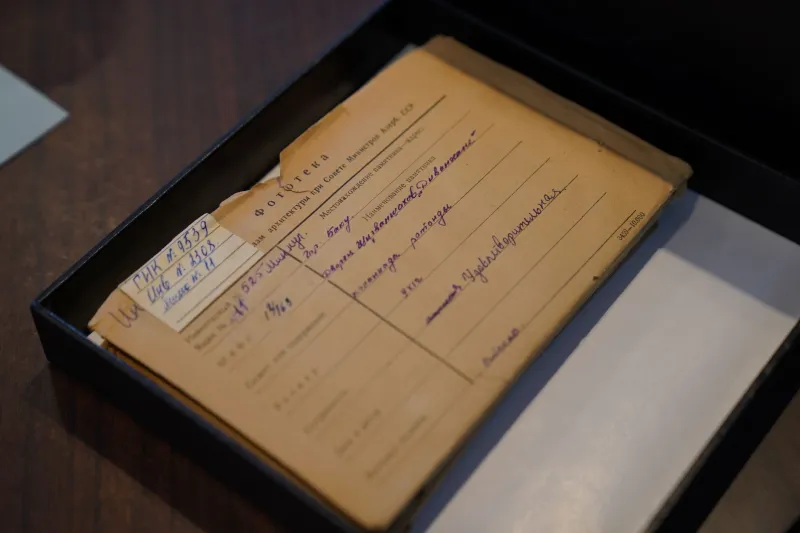
Perhaps the strangest footnote to the whole episode is this: when investigators reviewed Eleanor's original correction attempts from the 1970s, they found the acknowledgment letters exactly where they should have been — sitting in a regional office file, correctly labeled, completely ignored.
The system had received the alert. It had recorded the alert. It had simply never done anything with it.
For twenty-two years, the government sent a widow's pension to a woman who wasn't a widow, for a man who wasn't dead, because a piece of paper went into the wrong pile — and because the pile it went into was never, in all that time, looked at again.