Code Orange: When Uncle Sam Banned a Paint Color for Being Too Soviet
The Color That Threatened America
In 1954, somewhere in a federal office building in Washington D.C., a government bureaucrat stamped "NATIONAL SECURITY RISK" on a document describing a shade of orange paint. Not because it was poisonous, radioactive, or even particularly ugly — but because of where its key ingredient came from.
 Photo: Washington D.C., via jooinn.com
This is the story of how Cold War paranoia turned a hardware store staple into an enemy of the state, and why for three years, painting your house the wrong color could technically make you a security threat.
The Pigment Problem
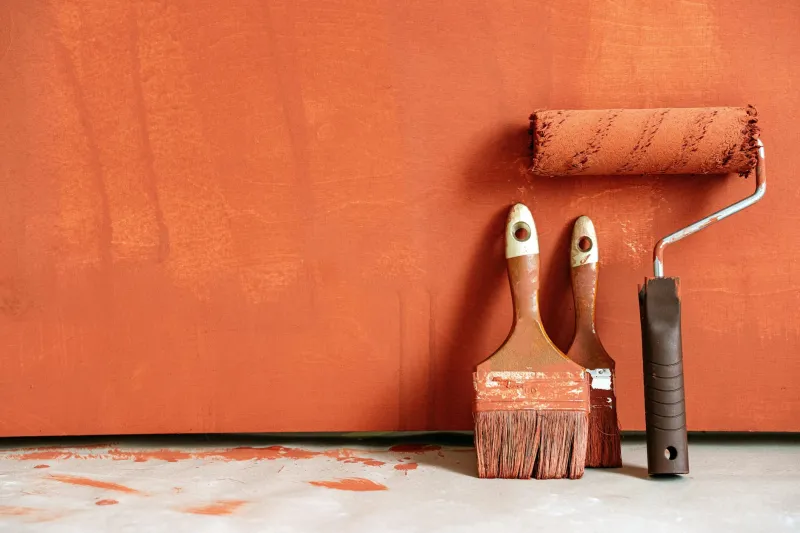
The trouble started with cadmium orange, a vibrant pigment that had been used in American paints since the 1920s. Hardware stores across the country sold it under names like "Sunset Glow" and "Autumn Blaze." It was popular for painting barns, front doors, and the occasional adventurous living room.
What paint buyers didn't know was that the cadmium sulfide used to create this particular orange came almost exclusively from mines in the Soviet Union and Eastern Bloc countries. As the Cold War intensified, someone in the Department of Commerce realized that Americans were literally painting their homes with Communist minerals.
 Photo: Soviet Union, via www.globalsecurity.org
The discovery came during a routine materials audit conducted by the newly formed Office of Strategic Materials. A junior analyst named Robert Kellerman was tasked with tracking the origins of various industrial imports when he noticed an unusual pattern: nearly 78% of cadmium sulfide entering the United States was coming from Soviet-controlled territories.
From Paint to Panic
What happened next reads like a bureaucratic comedy, except it was deadly serious. Kellerman's report worked its way up the chain of command, gaining urgency at each level. By the time it reached the desk of Assistant Secretary of Commerce Samuel Anderson, cadmium orange had been reframed as a potential economic weapon.
The logic was twisted but not entirely unreasonable by 1950s standards: if the Soviets controlled the supply of this pigment, they could theoretically manipulate prices or cut off supply entirely, disrupting American manufacturing. More paranoid officials worried that the Soviets might be using paint sales to track American industrial capacity or even introduce contaminants into the supply chain.
On March 15, 1954, the Department of Commerce issued Federal Notice 54-127, officially designating cadmium orange pigments as "materials of strategic concern." The notice didn't ban the color outright, but it required any business selling cadmium orange paint to register with the federal government and report sales quarterly.
The Paint Police
The implementation was as absurd as the policy. Hardware store owners across America received official letters informing them that they were now "strategic materials dealers" and needed federal licenses to sell certain orange paints. Many store owners initially thought it was a prank.
Henry Kowalski, who owned a paint shop in Cleveland, later recalled: "I had FBI agents come into my store asking about who was buying orange paint. I thought they were looking for bank robbers or something. When they explained it was about the Russians, I figured the whole government had gone crazy."
The bureaucratic requirements were staggering. Retailers had to maintain detailed records of every orange paint sale, including customer names, addresses, and intended use. Monthly reports went to three different federal agencies. Some stores simply stopped carrying orange paint altogether rather than deal with the paperwork.
The Underground Orange Market
Predictably, the regulations created exactly what they were meant to prevent: a black market. Professional painters, frustrated by the new requirements, began mixing their own orange pigments using red and yellow paints — ironically, many of those base colors also contained Soviet-sourced materials that somehow escaped regulatory notice.
Art supply stores, which were initially exempt from the regulations, suddenly found themselves selling unusual quantities of cadmium orange to "amateur painters" who were clearly professional contractors. The exemption was closed within six months, but not before several entrepreneurial art dealers made small fortunes.
The Color Revolution
The paint industry's response was swift and decisive: they simply reformulated. Major manufacturers like Sherwin-Williams and Benjamin Moore quietly developed new orange pigments using domestic chrome and iron oxide compounds. The new formulations were slightly different in hue — less vibrant, more muted — but most consumers never noticed.
By 1957, virtually all "orange" paint sold in America was actually a different chemical compound than it had been three years earlier. The Soviet-sourced cadmium orange had been completely replaced by domestic alternatives, making the federal regulations obsolete.
The Quiet End
Federal Notice 54-127 was quietly rescinded in December 1957, with no fanfare or explanation. The official reason cited "changes in strategic materials assessment," but internal memos revealed the real motivation: the regulations had successfully eliminated Soviet cadmium from American paint, making the whole system pointless.
The strangest part? The new domestic orange pigments were actually superior to the Soviet imports — more stable, longer-lasting, and cheaper to produce. American paint companies had been using inferior Soviet materials simply because they were available, not because they were better.
Legacy of the Orange Scare
Today, the three-year war on orange paint is largely forgotten, but it left lasting changes in American manufacturing. The incident led to the creation of the Strategic Materials Assessment program, which still monitors foreign sourcing of industrial components. Paint manufacturers also began diversifying their supply chains as a matter of policy, a practice that proved valuable during later trade disputes.
More importantly, it demonstrated how quickly Cold War fears could turn the mundane into the threatening. For three years, something as simple as painting your barn could technically involve you in matters of national security — all because someone in Washington noticed that our orange was a little too red.