America's Greatest Accidental Museum: The Government Warehouse That Forgot to Throw Anything Away
Every year, the federal government conducts thousands of routine inventory audits. Usually, these involve counting staplers and checking serial numbers on office equipment. But sometimes—very rarely—an audit uncovers something so extraordinary that it rewrites American history.
That's exactly what happened when inventory specialist Janet Morrison unlocked Warehouse 7 at the Whiteman Federal Storage Complex in Missouri on a humid Tuesday morning in June 1987.
The Warehouse That Time Forgot
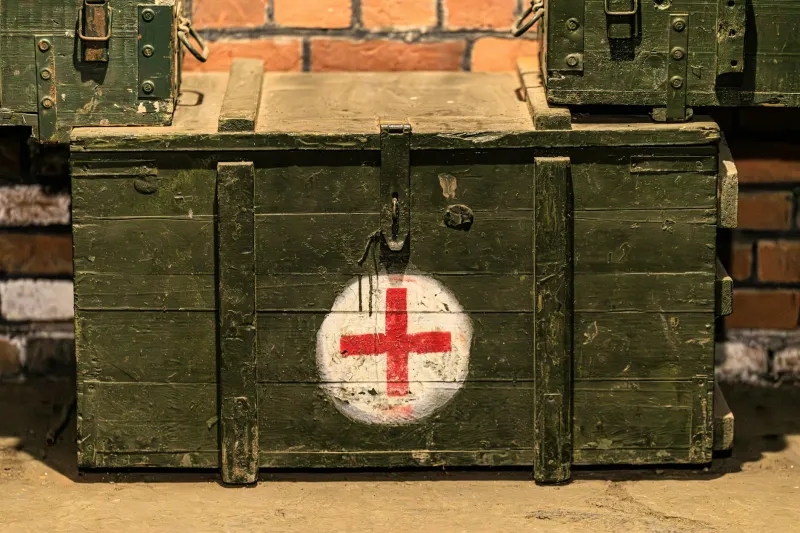
Morrison was expecting to find the usual government surplus: outdated office furniture, obsolete electronics, maybe some agricultural equipment. What she discovered instead were 3,247 sealed wooden crates, stacked floor to ceiling, each one carefully labeled with dates ranging from 1934 to 1941.
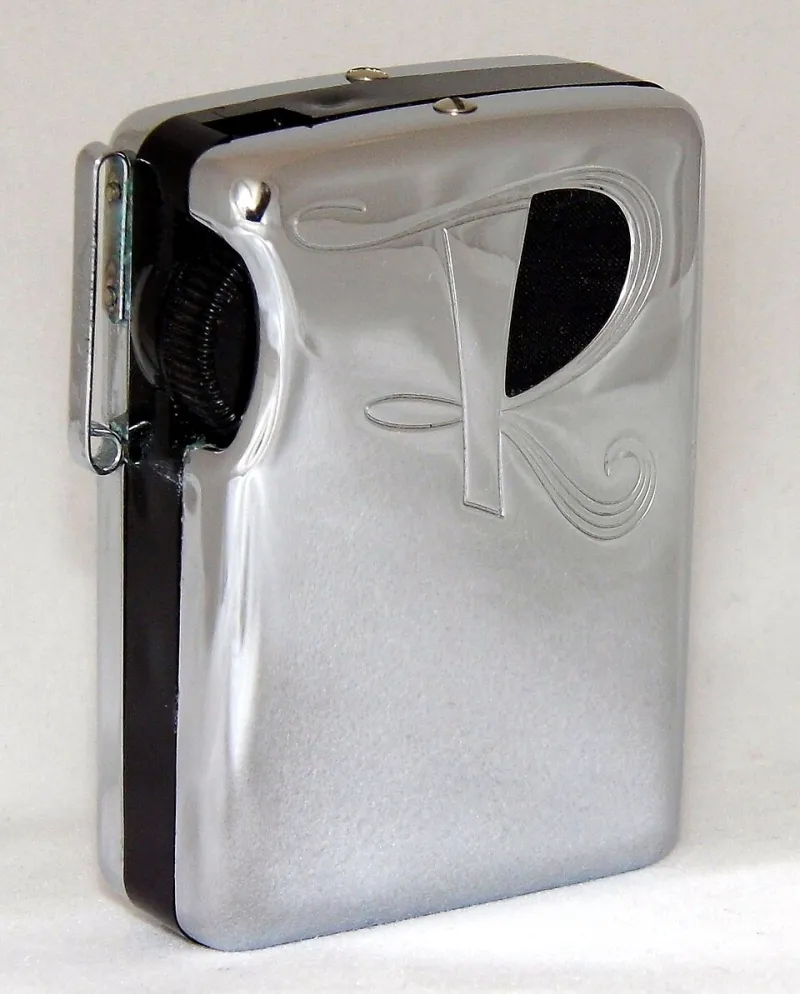
The crates had been classified as "Agricultural Surplus—Grain Samples" and apparently forgotten for nearly half a century. But when Morrison pried open the first container, she didn't find grain samples. She found a perfectly preserved 1930s kitchen appliance that had never made it to market, wrapped in newspapers from the Hoover administration.
"I knew immediately this wasn't agricultural surplus," Morrison recalls. "The first crate contained what looked like a prototype electric coffee percolator, complete with the inventor's handwritten notes attached. The second had a collection of personal letters tied with ribbon. By the third crate, I was calling my supervisor."
What Morrison had stumbled upon was the most comprehensive accidental time capsule in American history—thousands of items that had been confiscated, collected, or submitted to various federal agencies during the Great Depression and then systematically misfiled and forgotten.
Inside America's Lost Decade
As word of the discovery spread through the National Archives, teams of historians and archivists descended on the Missouri facility. What they found painted a picture of Depression-era America that no textbook had ever captured.
The crates contained everything from failed patent applications for bizarre inventions (a solar-powered radio, a collapsible automobile, a machine that claimed to turn water into gasoline) to personal belongings confiscated during forgotten legal cases. There were hundreds of handwritten letters from farmers pleading with government officials for assistance, prototype products from companies that never survived the economic collapse, and even a collection of home movies shot by a Works Progress Administration photographer who had been documenting rural life.
Dr. Elizabeth Hartwell, the Smithsonian curator who led the initial cataloging effort, describes the discovery as "like finding Pompeii, but for the American 1930s."
"These weren't museum pieces," Hartwell explains. "These were the actual artifacts of people's daily lives during one of our most challenging periods. We found children's toys, family photographs, business records, personal diaries—all perfectly preserved because some clerk in 1936 put them in the wrong filing category."
The Paper Trail to Nowhere
The mystery of how thousands of items ended up mislabeled and forgotten took months to unravel. The answer, it turned out, lay in a bureaucratic comedy of errors that could only happen in a government system overwhelmed by the scale of the Great Depression.
In 1934, the newly created Agricultural Adjustment Administration had been tasked with managing everything from crop subsidies to rural economic development. Overwhelmed clerks, working with limited storage space and unclear filing protocols, had apparently used "Agricultural Surplus" as a catch-all category for anything that didn't fit neatly into other classifications.
"The paperwork trail is fascinating in its confusion," notes administrative historian Dr. Robert Chen of Georgetown University, who spent two years reconstructing the warehouse's history. "We found requisition forms where the same items are listed as 'Patent Office Materials,' 'Evidence—Various Cases,' and 'Agricultural Surplus' depending on which department was handling the paperwork that day."
The items had been shipped to Missouri in 1941 as part of a consolidation effort to free up warehouse space in Washington. The plan was to sort through everything and dispose of items that were no longer needed. But then Pearl Harbor happened, and suddenly the government had bigger priorities than organizing old paperwork.
Legal Battles and Ethical Dilemmas
Once news of the discovery became public, the legal complications began almost immediately. Families of people whose belongings had been confiscated during Depression-era legal cases began filing claims. Patent holders whose applications had been lost in the bureaucratic shuffle demanded their intellectual property back. Even the Smithsonian faced challenges in determining what could legally be preserved for historical study.
The most complex case involved the estate of inventor Harold Pemberton, whose prototype for a "Depression-proof" household appliance had been sitting in Crate #1,847 since 1936. Pemberton's heirs argued that the delayed patent application, if processed correctly, would have made their family wealthy. The case eventually reached federal court and wasn't resolved until 1993.
"We were dealing with 50-year-old property rights, estate claims, and questions about government liability for bureaucratic errors," explains federal attorney Sarah Rodriguez, who handled many of the warehouse-related cases. "Some families had been wondering what happened to their relatives' belongings for decades. Others had no idea their ancestors had ever filed patents or been involved in federal cases."
Treasures in the Bureaucratic Trash
Among the thousands of items cataloged, several stood out as particularly significant historical finds. A collection of photographs documenting the construction of the Golden Gate Bridge, thought to have been lost, turned up in a crate marked "Agricultural Survey Materials." The personal correspondence of a forgotten Dust Bowl photographer provided new insights into the human cost of the environmental disaster.
 Photo: Golden Gate Bridge, via images.rawpixel.com
Perhaps most remarkably, the warehouse contained the complete business records of 47 companies that had failed during the early years of the Great Depression—providing economists with unprecedented data about how small businesses actually collapsed during the economic crisis.
"We found the actual receipts, customer lists, and internal memos from companies that historians had only known through newspaper obituaries," says economic historian Dr. Margaret Foster of Yale University. "It's like having a complete autopsy of the American economy in 1932."
The Museum That Almost Wasn't
Today, the most significant items from Warehouse 7 are housed in a permanent exhibit at the National Museum of American History, titled "The Accidental Archive: Rediscovering Depression-Era America." But the collection almost ended up in a different kind of warehouse—a landfill.
 Photo: National Museum of American History, via architizer-prod.imgix.net
Initial government reaction to the discovery was to treat it as a storage problem rather than a historical treasure. Early memos, obtained through Freedom of Information Act requests, show federal administrators discussing "disposal options" for the warehouse contents.
It was only after historians and archivists launched a public campaign that the government agreed to preserve the collection for research and public display.
"This discovery fundamentally changed how we understand the Great Depression," reflects Dr. Hartwell. "These weren't the carefully curated artifacts that people chose to preserve. This was the random stuff of daily life, frozen in time by bureaucratic accident."
The last crate from Warehouse 7 was finally cataloged in 1995, nearly eight years after Janet Morrison first unlocked the door. Her discovery had turned a routine inventory check into one of the most significant historical finds of the 20th century—proving that sometimes the most important discoveries happen when the government forgets to throw things away.