A Misdelivered Envelope Kept Two Strangers Legally Married for Three Decades
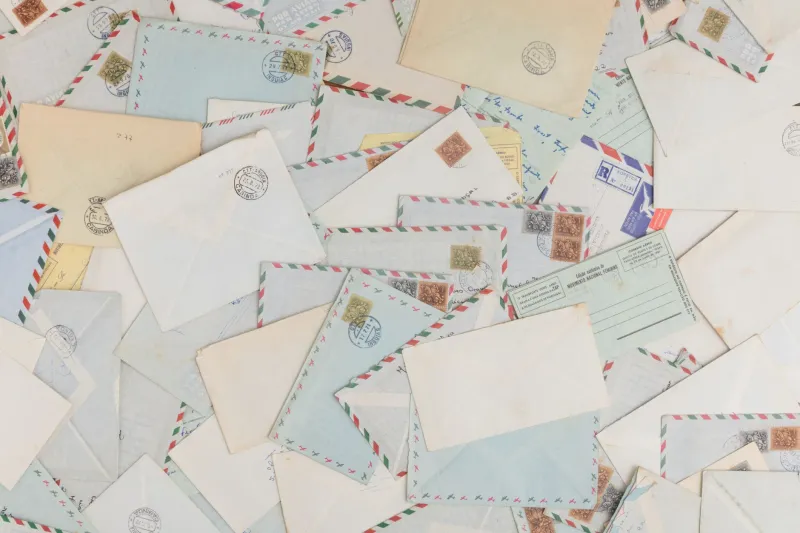
Somewhere in a Minnesota county courthouse, there exists a paper trail documenting one of the more quietly catastrophic postal errors in American history. It doesn't involve missing treasure or lost military dispatches. It involves two people who spent the better part of their adult lives legally bound to complete strangers — because someone wrote down the wrong address on an envelope.
This is not a folk tale. It is not an embellishment. It is a documented legal case that unfolded over decades, and it is exactly as absurd as it sounds.
How Mail-Order Courtship Actually Worked
To understand how this happened, you need to understand how a significant portion of frontier-era Americans actually found spouses.
By the late 1800s and early 1900s, the rural Midwest and Plains states had a serious demographic imbalance. Farming communities were overwhelmingly male — men had staked claims, broken ground, and built homesteads, but the women who might have made those homesteads into homes were often still back east, in cities, or in immigrant communities that hadn't yet dispersed into the countryside.
The solution, for many men, was correspondence. Newspapers ran personal columns. Churches facilitated introductions by letter. Dedicated "matrimonial bureaus" — essentially primitive matchmaking agencies — operated through the mail, maintaining lists of eligible women willing to correspond with eligible men, with the understood possibility that successful correspondence might lead to a formal proposal and, eventually, a train ticket west.
It worked often enough to be common. It also created a system with an obvious and significant vulnerability: everything depended on the mail going to the right person.
The Letter That Went Somewhere Else
The specific case at the center of this story — documented in Minnesota county records and referenced in early twentieth century legal discussions about marriage validity — involved a farmer, identified in various accounts as residing in southern Minnesota, who had been corresponding with a woman through one of these matrimonial intermediary services.
The correspondence had gone well. Letters had been exchanged over several months. A proposal had been made and, apparently, accepted. Arrangements were underway for the woman to travel west and formalize the marriage.
Somewhere in that chain of letters, something went wrong. The leading account, supported by the court documentation, holds that a clerical error at the correspondence bureau — likely a misfiled address or a transposed letter in a surname — resulted in at least one critical piece of correspondence being delivered to the wrong woman entirely. A woman who, by some accounts, had been corresponding with a different man through the same service, and whose own letters had also gone astray in the same shuffle.
The exact mechanics of what happened next vary depending on which account you're reading, but the outcome is consistent: the farmer ended up meeting, and marrying, a woman he had never actually corresponded with. The woman he had been writing to — the one who had agreed to his proposal — received no letter, waited for an arrival that never came, and eventually moved on with her life.
The Part That Sounds Most Invented
Here's where the story shifts from unfortunate to genuinely remarkable.
The marriage, once performed, was legally valid. The two strangers were, by every measure the state of Minnesota recognized, husband and wife. And when the reality of the situation became clear — when it emerged that the courtship letters and the actual woman were two entirely different things — the path forward was not simple.
Divorce in early twentieth century America was neither easy nor cheap. It required filing fees, legal representation, court appearances, and the navigation of a system that was not particularly sympathetic to the idea that a marriage might be invalid simply because the parties hadn't known each other beforehand. The grounds for annulment were narrow. Fraud was difficult to prove when the "fraud" was essentially a postal accident rather than deliberate deception.
Neither party, by the accounts preserved in the legal record, had the financial resources to pursue the matter through the courts. The farmer was a working homesteader operating on thin margins. The woman — who had, by all accounts, been just as blindsided as he was — had no independent means to fund protracted litigation.
So they stayed married. On paper. For years.
Living Separate Lives, Bound by a Stamp
What makes this case particularly well-documented is that both parties eventually did move on with their lives — they simply did so while technically still married to each other. The woman returned to her home state. The farmer continued working his land. For roughly three decades, according to the county records, the legal marriage persisted because the bureaucratic and financial barrier to dissolving it was simply too high for either person to clear.
Legal historians who have examined cases like this one note that it was not as isolated as it sounds. Mail-order marriage arrangements were common enough, and postal systems unreliable enough, that mix-ups and mismatches occurred with some regularity in this era. Most were resolved quickly. Some, like this one, became entangled in the gap between what people could afford and what the legal system required.
The marriage was eventually dissolved — the records indicate a final resolution was reached in the 1930s — but by then, both parties were well into middle age, and the lives they might have built with the people they'd actually intended to marry were long gone.
One Wrong Address
It is almost impossible to read this story without stopping at the sheer weight of what one misdelivered letter actually cost. Two people lost decades of potential partnership, legal clarity, and simple peace of mind because someone at a correspondence bureau wrote down the wrong address — or transposed two letters in a name — on a single envelope.
The postal service has gotten considerably more reliable since then. The legal system has gotten considerably more accessible. Mail-order matrimonial bureaus are, thankfully, no longer the primary technology connecting lonely farmers with potential spouses.
But the case sits in those county records, quietly, as evidence of something history occasionally demonstrates with uncomfortable clarity: sometimes the smallest clerical error carries the largest possible consequences. And sometimes, the paperwork outlives everything else.