The Doctor Who Cut Out His Own Appendix at the Bottom of the World
Imagine being the only doctor at a research station in Antarctica when you suddenly need an emergency appendectomy. There's no helicopter coming to rescue you, no medical evacuation possible, and the nearest surgeon is literally thousands of miles away across frozen wasteland. You have two choices: die slowly from appendicitis, or cut yourself open and hope for the best.
That's exactly what happened to Soviet physician Leonid Rogozov on April 30, 1961, at the Novolazarevskaya research station in Antarctica. And somehow, impossibly, he chose option two—and lived to tell about it.
 Photo: Leonid Rogozov, via media.zid.store
When the Only Doctor Becomes the Patient
Rogozov was 27 years old and the sole physician among the 13-man Soviet Antarctic expedition. He'd been feeling unwell for days, but initially attributed his symptoms to the harsh conditions and isolation. When the pain in his lower right abdomen became unbearable and he developed a fever, his medical training kicked in with a terrifying diagnosis: acute appendicitis.
In most places on Earth, this would mean a quick trip to the emergency room. But Novolazarevskaya station was as isolated as a human being could be—surrounded by thousands of miles of ice, with winter storms making any rescue impossible. The nearest medical facility was at least 1,000 miles away, and even if a plane could somehow reach them, Rogozov knew he'd be dead long before help arrived.
The appendix doesn't wait for convenient timing. Left untreated, appendicitis leads to rupture, sepsis, and death within days. Rogozov calculated his odds: certain death from doing nothing, or a slim chance of survival if he operated on himself.
The Most Impossible Surgery Ever Attempted
On the morning of May 1, 1961, Rogozov made his decision. He would perform his own appendectomy.
He spent hours preparing, setting up the small station's medical room as an operating theater. He positioned mirrors so he could see his own abdomen, though the reflection would be reversed—imagine trying to tie your shoes while looking in a mirror, except you're cutting into your own body.
Rogozov recruited two assistants from among the researchers: meteorologist Alexandr Artemev and driver Zinovy Teplinsky. Neither had any medical training whatsoever, but they would have to hand him instruments and hold the mirrors steady. He gave them a crash course in basic surgical assistance, knowing their hands would be crucial to his survival.
Operating in a Mirror Universe
The surgery began at 10 PM local time. Rogozov administered local anesthetic to his abdomen—he couldn't risk general anesthesia since he needed to remain conscious to guide the operation. Using a mirror for guidance, he made the first incision.
Almost immediately, the psychological challenge became as daunting as the physical one. Every instinct screamed at him to stop cutting into his own flesh. The reversed mirror image made every movement counterintuitive. His untrained assistants struggled to anticipate his needs, sometimes handing him the wrong instruments or losing their nerve entirely.
Worst of all, Rogozov began experiencing nausea and weakness from the pain and blood loss. Every few minutes, he had to pause the operation to rest, fighting the urge to pass out. At one point, his heart rate became so erratic that he worried he might not regain consciousness if he fainted.
The Moment of Truth
After nearly two hours of painstaking work, Rogozov finally located his appendix. It was severely inflamed and on the verge of rupturing—confirming that waiting even another day would have been fatal.
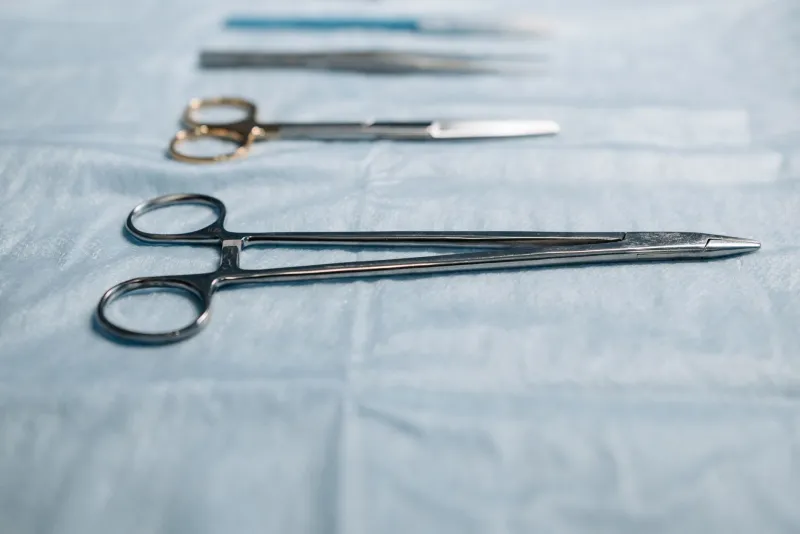
Using surgical scissors, he carefully removed the infected organ, fighting through waves of pain and dizziness. His assistants watched in amazement and horror as their colleague performed what should have been an impossible feat of medical precision and mental fortitude.
The most dangerous moment came during the final stages, when Rogozov had to suture his own abdominal wall closed. One mistake in the stitching could lead to internal bleeding or infection. Working entirely by feel and mirror image, he methodically closed each layer of tissue.
The Recovery That Defied All Logic
The surgery was completed at 1:50 AM—nearly four hours after it began. Rogozov's assistants helped him to his bed, where he immediately fell into an exhausted sleep.
Against all odds, the operation was a complete success. Rogozov's fever broke within days, and his surgical site healed without infection. Within two weeks, he was back to his duties as the station's physician, as if nothing extraordinary had happened.
He continued serving at the Antarctic station for another year before returning to the Soviet Union, where he became something of a legend in medical circles. The appendix he removed was preserved and later studied by Soviet medical researchers, who confirmed it would have killed him within hours if left untreated.
When Desperation Meets Surgical Skill
Rogozov's self-surgery remains one of the most remarkable medical procedures ever documented. It required not just surgical skill, but extraordinary mental discipline to overcome the body's natural resistance to self-harm. Medical experts who have studied the case note that the psychological barriers alone should have made the surgery impossible.
The story highlights both human ingenuity under extreme circumstances and the peculiar isolation of Cold War-era research stations. Today, Antarctic bases have better communication systems and emergency evacuation protocols, making Rogozov's situation less likely to occur.
But in 1961, at the bottom of the world, one Soviet doctor proved that when faced with certain death, the human will to survive can overcome even the most impossible circumstances. Sometimes the most unbelievable stories are the ones where someone simply refused to accept that they were going to die—and did something about it.