The Wrong Face on the Money: How a U.S. Mint Blunder Accidentally Created a Collector's Fortune
Photo: Viano Arcery, CC BY 4.0, via Wikimedia Commons
The Pressroom Where History Gets Made — and Sometimes Unmade
The Bureau of Engraving and Printing is not a place that tolerates mistakes. The facility that produces America's paper currency operates under security protocols that would make a Cold War general nervous, with quality control systems layered so deep that getting a misprint through should be, by every reasonable measure, impossible.
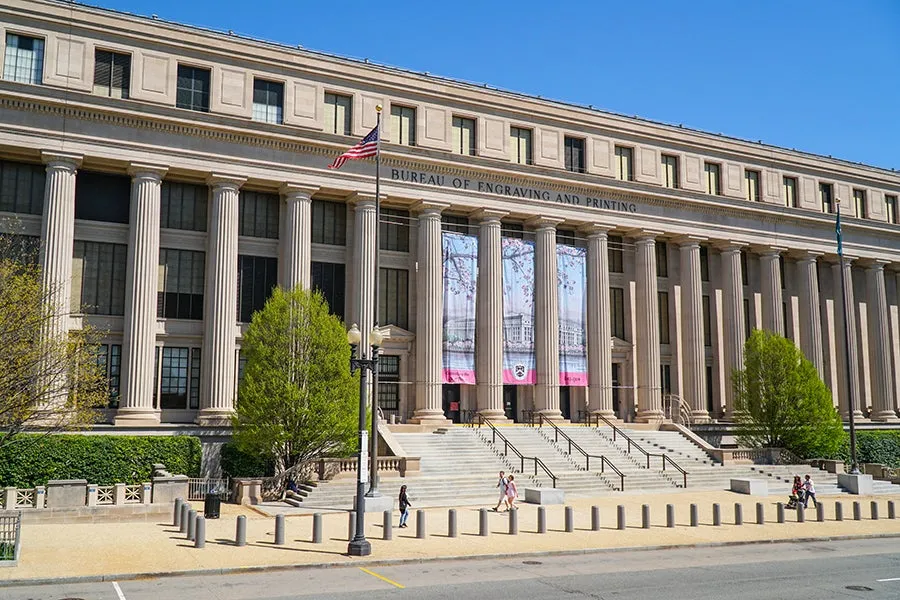 Photo: Bureau of Engraving and Printing, via washington.org
And yet.
At some point during a production run that the Bureau would very much prefer you didn't think too hard about, thousands of bills came off the press bearing a portrait that had absolutely no business being there. Not a smudge. Not a blur. A completely different face, printed with the same meticulous precision as everything else, staring out from the center of legal American tender like it owned the place.
The government's response was swift, decisive, and — in the way that only government responses can be — an almost perfect recipe for making things dramatically worse.
How You Print the Wrong Face on Money
To understand how this happens, you need to understand how currency printing actually works. The process involves multiple plate stages, each handling a different layer of the final bill — the background, the serial numbers, the portrait, the treasury seal. Each stage is theoretically checked against the previous one.
The word "theoretically" is doing a lot of heavy lifting in that sentence.
Currency printing errors fall into a few broad categories: inverted images, missing print layers, misaligned cuts, and — the rarest and most dramatic — wrong die errors, where a plate intended for one denomination or series gets paired with elements from another. In most cases, these errors produce bills that look subtly off: a slightly crooked serial number, a smeared background. Wrong die errors produce something far more striking.
When a wrong portrait plate enters the process, the result is a bill that is technically perfect in every mechanical sense and completely wrong in every other sense. The engraving is crisp. The ink is correct. The paper stock is genuine. The face just... isn't supposed to be there.
Quality control is designed to catch this. Inspectors review sheets before cutting. Automated systems flag anomalies. The checks exist precisely because human error in a pressroom running millions of sheets is not a question of if but when.
On this particular occasion, the checks failed. Not catastrophically — not millions of bills. But enough.
The Quiet Recall That Wasn't Quiet
When the Bureau discovered the error, the institutional instinct was containment. Pull the affected run. Destroy the bills. Document the incident internally. Move on. This is standard procedure for currency errors, and it works — most of the time.
The problem is that "pulling an affected run" assumes you know exactly where every sheet went. Currency distribution involves multiple federal reserve banks, regional distribution centers, and armored transport routes, all moving simultaneously. By the time the error was confirmed and the recall order went out, a portion of the misprinted bills had already entered the distribution pipeline.
Federal agents and Bureau representatives began making quiet visits to regional reserve facilities, presenting documentation and requesting specific shipments back. They were, by most accounts, extremely polite about it and extremely tight-lipped about why.
Banks noticed. Bank employees talk. Collectors who had informants inside regional reserve operations — and there are more of these people than you might expect — started hearing whispers about a currency anomaly that the government was very interested in recovering.
The quiet recall became, within weeks, an open secret in numismatic circles.
When "Priceless Mistake" Becomes Literally True
Here's the thing about misprinted currency: the government's eagerness to recover it is, paradoxically, the single best advertisement for its value. Every collector who heard about federal agents politely asking for specific bills back immediately understood that those bills were extraordinary.
The handful of misprinted notes that had already moved beyond the distribution pipeline — passed through banks, deposited, circulated — were effectively impossible to recover through official channels. You cannot compel a private citizen to surrender legal tender simply because it's embarrassing.
Those bills began surfacing in collector markets within a few years, each one authenticated through a combination of serial number analysis, paper stock verification, and the unmistakable evidence of the wrong portrait rendered in perfect Bureau-quality engraving.
At auction, individual examples of major currency error notes — including wrong portrait errors — have sold for anywhere from several thousand dollars to well over fifty thousand, depending on condition and provenance. Notes with documented chain of custody tracing them back to the original print run command even higher premiums.
The irony is exquisite: the government spent considerable resources trying to prevent these bills from having any value, and that effort is precisely what made them so valuable.
The Lesson the Mint Learned (Probably)
The Bureau of Engraving and Printing has, over the decades, dramatically upgraded its quality control systems. Modern currency production involves digital imaging verification, automated sheet-by-sheet inspection, and redundant human review at multiple stages. The probability of a wrong portrait error making it through today's process is genuinely close to zero.
But "close to zero" and "zero" are different things, and collectors know it.
Somewhere in a private collection — possibly several private collections — there are bills featuring a face that was never supposed to be there, printed with the full technical mastery of the United States government, certified as genuine American currency, and worth a fortune precisely because of the mistake that created them.
The U.S. Mint once accidentally made some people very rich while trying to do the opposite.
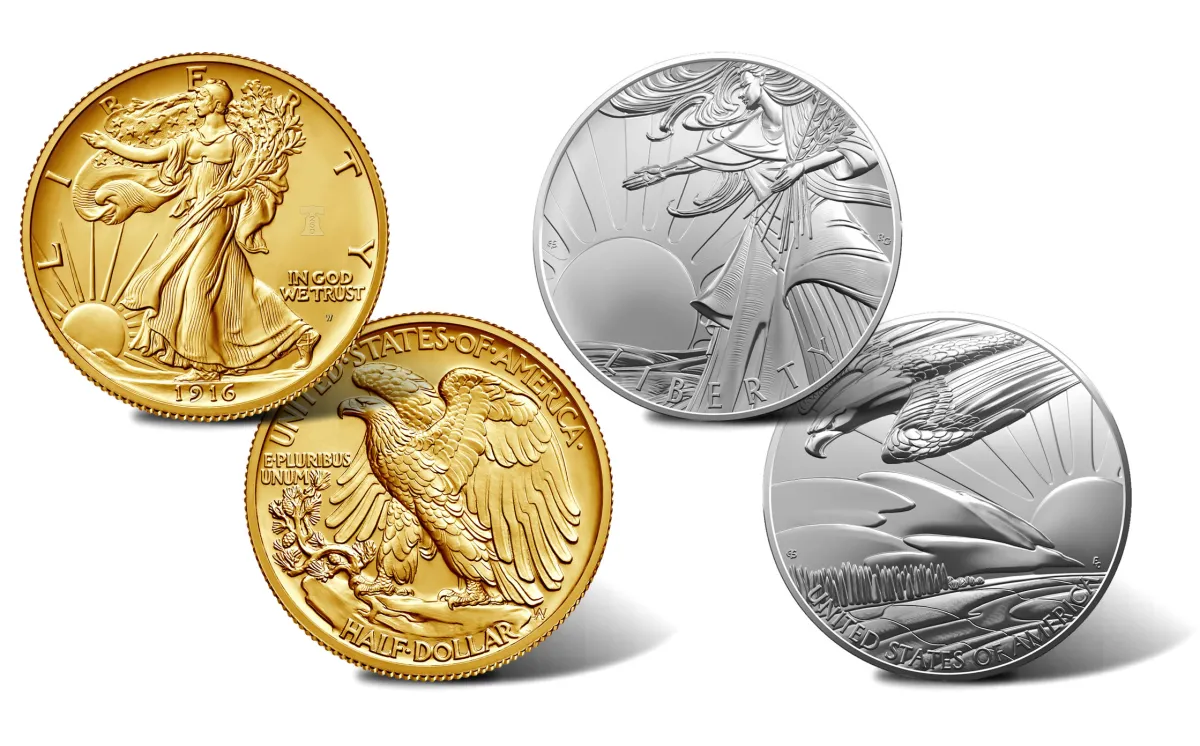 Photo: U.S. Mint, via www.coinnews.net
That's not a rumor. That's just what happens when bureaucracy meets a printing press and the quality control gods take a coffee break.