One Dead Pig Nearly Pushed the U.S. and Britain Into Their Second War
There's a version of American history where the War of 1812 has a sequel. Where the United States and Great Britain — two nations that had already fought each other twice — went to war a third time over a strip of island barely eight miles wide. In that version, the conflict starts not with a political assassination or a naval blockade, but with a pig eating someone's potatoes.
This is not that version. But it came embarrassingly close to being.
A Very Small Island With a Very Big Problem
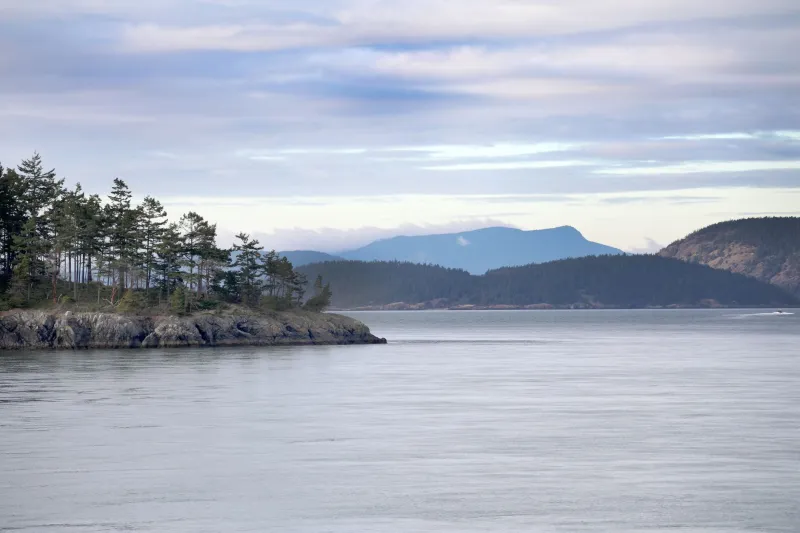
San Juan Island sits in the straits between what is now Washington State and British Columbia — a beautiful, forgettable patch of Pacific Northwest real estate that in 1859 was home to a handful of American settlers, a Hudson's Bay Company sheep farm, and one jurisdictional headache nobody had fully sorted out.
The Oregon Treaty of 1846 had drawn a boundary between the U.S. and British Canada, but the language describing exactly which channel the line ran through was vague enough that both countries quietly claimed San Juan Island as their own. For a while, this was mostly an abstract disagreement. The island was small. The stakes seemed low. Both sides tacitly agreed to let the question sit.
Then, on June 15, 1859, a large black pig belonging to the Hudson's Bay Company wandered onto the property of an American farmer named Lyman Cutlar and began destroying his potato garden.
Cutlar, by most accounts, was not a patient man. He shot the pig dead.
The Escalation Nobody Asked For
What followed was a masterclass in how quickly a minor property dispute can spiral into an international incident when the wrong people get involved.
The Hudson's Bay Company demanded compensation. Cutlar offered a modest sum. The company rejected it and threatened to have him arrested — under British authority, on land the Americans considered American soil. American settlers, alarmed by the idea of British officials hauling their neighbor away, sent a petition to the U.S. Army requesting military protection.
The Army obliged. Specifically, a 35-year-old captain named George Pickett — yes, that George Pickett, the same man who would later lead the disastrous Confederate charge at Gettysburg — landed on San Juan Island with 66 soldiers and orders to protect American citizens.
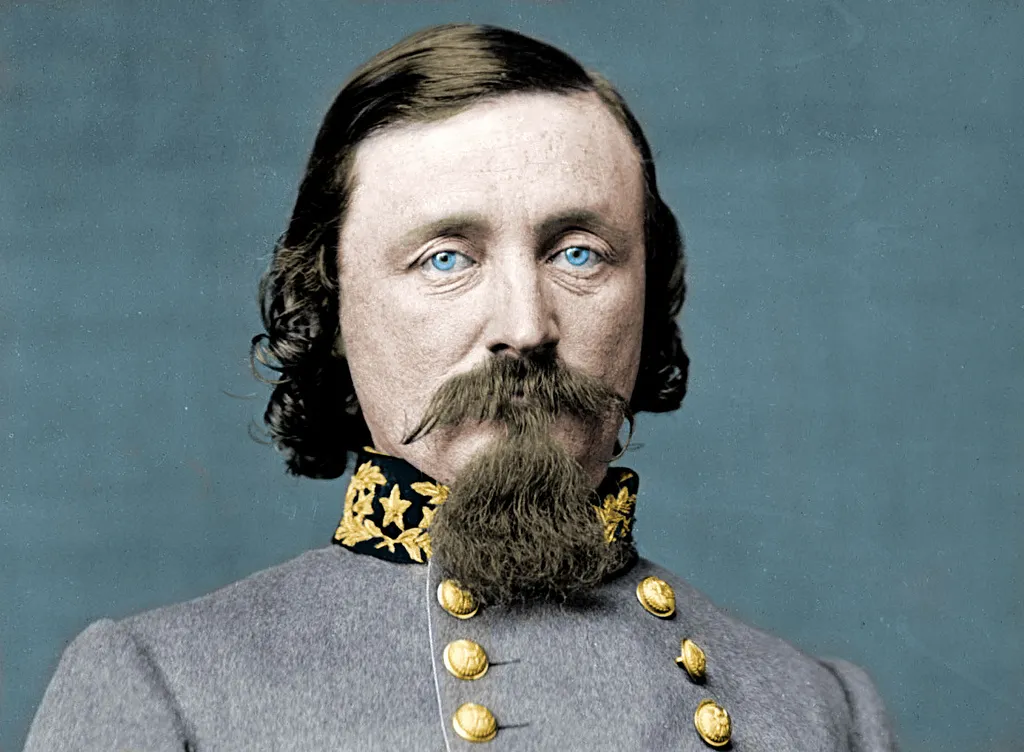 Photo: George Pickett, via civilwargeneralsab.weebly.com
Britain responded by sending warships.
By late summer, the situation had escalated to roughly 460 American troops and 14 cannons facing down five British warships carrying 167 guns and over 2,000 men. Two nations were genuinely, measurably on the brink of armed conflict over a pig that had been dead for two months.
The Generals Who Blinked
What saved everyone from catastrophe was, improbably, a pair of military commanders with enough sense to recognize how ridiculous the situation had become.
British Rear Admiral Robert Baynes received orders from Governor James Douglas to land marines and confront the Americans. He refused. His exact reasoning, paraphrased from his own correspondence, was essentially that he had no intention of starting a war over a disagreement between farmers. The official record is more diplomatic, but the sentiment is clear: Baynes thought the whole thing was absurd.
On the American side, General Winfield Scott — a genuine hero of the War of 1812 and the Mexican-American War — was dispatched by President James Buchanan to defuse the situation personally. Scott negotiated a joint military occupation of the island: both nations would maintain a small garrison, nobody would shoot anyone, and the underlying territorial question would be settled through diplomatic channels.
It was, by any measure, the sanest possible outcome. It was also a solution that took twelve more years to actually implement.
Twelve Years of Peaceful Coexistence Over a Pig
From 1859 to 1872, American and British soldiers shared San Juan Island in what historians describe as one of the most cordial joint military occupations in recorded history. The two garrisons held joint celebrations on each other's national holidays, traded supplies, and by most accounts got along remarkably well.
The formal dispute was eventually settled in 1872 by Kaiser Wilhelm I of Germany, serving as an agreed-upon neutral arbitrator. He ruled in favor of the United States. San Juan Island became definitively American.
The pig, of course, received no ruling whatsoever.
Why This Story Refuses to Be Forgotten
The Pig War — which is its actual, official historical name — occupies a strange corner of the American story because it represents something both funny and genuinely frightening. Two of the world's most powerful nations nearly went to war not because of ideology, not because of economics, not because of any principle worth defending, but because a series of small decisions made by ordinary people in a moment of irritation kept getting handed upward to people with more authority and less perspective.
Cutlar shot a pig. A company demanded money. A soldier was dispatched. A fleet was mobilized. Two armies squared off.
At every step, someone could have said: this is not worth it. Most of them didn't. The ones who finally did — Baynes and Scott — are the unsung heroes of an event that most Americans have never heard of.
Today, San Juan Island is home to a National Historical Park commemorating the Pig War. The British and American camps are both preserved. There are interpretive signs, ranger programs, and a small but dedicated community of history enthusiasts who make the pilgrimage every year to stand on the ground where two nations nearly destroyed their relationship over a dead hog.
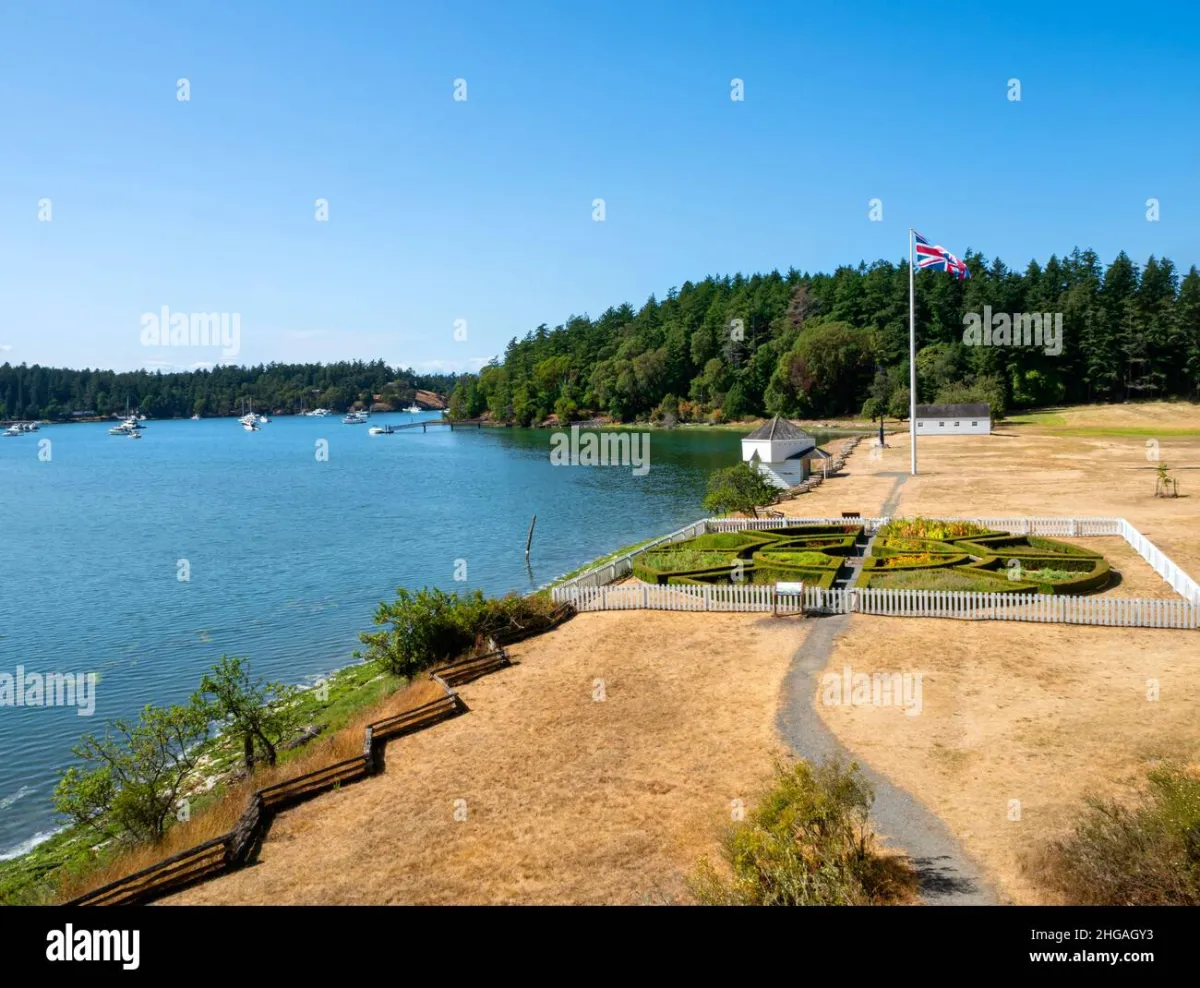 Photo: San Juan Island National Historical Park, via www.alamy.com
Somewhere in that park, there really should be a statue of the pig.