He Was Doing Time. He Was Also Doing the Books. Nobody Connected the Dots for Years.
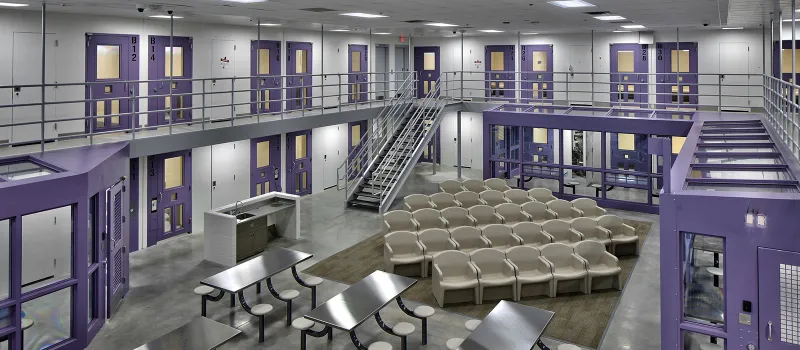
Photo: prison administrative office filing paperwork bureaucracy, via pikecs.com
There's a certain kind of story that sounds like the setup to a heist movie. A slick financial criminal, a cash-strapped institution, a paperwork gap nobody bothered to close. Except this one didn't end with a daring escape or a stolen fortune. It ended with auditors staring at a spreadsheet, then at a personnel file, then slowly back at the spreadsheet.
A convicted embezzler — sentenced to a federal minimum-security facility in the late 1990s — spent the better part of three years managing the prison's internal financial records as a de facto staff accountant. He wasn't on the payroll in any official sense. He wasn't a contractor. He was, by every legal measure, still an inmate. And yet, for a stretch of time that administrators would later struggle to fully account for, he had routine access to institutional budget documents, vendor invoices, and expense reconciliation files that most actual employees weren't cleared to touch.
How Something Like This Even Happens
Minimum-security federal facilities — often called "prison camps" in the system — operate on a fundamentally different logic than the institutions most people picture when they hear the word "prison." There are no walls in the traditional sense. Movement is relatively open. Inmates are frequently assigned work details that serve the facility's operational needs: kitchen work, landscaping, maintenance, clerical support.
That last category is where things get interesting.
Clerical work assignments at camps have historically been a way to manage labor costs while giving lower-risk inmates structured daily activity. The jobs are real. The work gets done. And in facilities that are chronically understaffed — which is most of them — the line between "inmate doing clerical work" and "person who actually understands how this office functions" can blur faster than anyone intends.
In this particular case, the inmate had a professional background that made him unusually good at the job. Before his conviction, he'd spent over a decade as a certified public accountant. The embezzlement that landed him in federal custody was, in a grim irony, a fairly sophisticated scheme involving falsified vendor accounts — exactly the kind of fraud that someone with deep accounting knowledge would know how to construct. And, presumably, how to spot.
Somebody in administration noticed his background. Somebody gave him a more complex assignment. And then, apparently, somebody forgot to keep asking questions.
The Part Where It Gets Genuinely Uncomfortable
The arrangement persisted, according to records reviewed during a subsequent internal audit, for somewhere between 26 and 34 months. The range exists because the documentation itself was inconsistent — which, given the circumstances, is its own kind of punchline.
During that window, the inmate reviewed and organized financial records that included operating budget summaries, commissary fund reconciliations, and procurement documentation. He flagged discrepancies. He prepared summary reports. He communicated, in writing, with outside vendors on matters of billing.
He did not, as far as investigators could determine, steal anything. He did not manipulate records for personal gain. By all accounts, the work was competent and largely accurate. One auditor's note, later made part of the internal report, described his filing system as "notably better organized than what preceded it."
That detail is somehow the strangest part of the whole story.
What the Audit Actually Found
The situation came to light not through any dramatic discovery but through a routine staffing review triggered by a budget cycle. An administrator cross-referencing personnel assignments against inmate work detail logs noticed that one individual appeared in both columns simultaneously — listed as an active inmate and as the person responsible for a set of financial records that should have had a credentialed staff member attached to them.
The resulting internal review took several months. The facility's warden at the time was reassigned. Several administrative policies governing inmate work detail assignments were rewritten. The inmate in question completed his sentence without additional charges, since no financial misconduct was identified.
The Bureau of Prisons declined to comment publicly on the specifics, which is consistent with how these things tend to go.
Why This Story Refuses to Be Simple
It's tempting to frame this as a straight-up institutional failure — and in procedural terms, it clearly was. An inmate with a fraud conviction had unsupervised access to financial records. That's a problem regardless of outcome.
But the story also reveals something more interesting about how large bureaucratic systems actually function. They don't fail all at once. They fail incrementally, through small decisions that each seem reasonable in isolation. Someone needed clerical help. Someone with relevant skills was available. The assignment expanded gradually. Nobody ever sat down and said, "Let's put the embezzler in charge of the budget" — they just never stopped to notice that's what had happened.
The federal minimum-security system houses tens of thousands of people at any given time, many of them white-collar offenders with professional credentials in finance, law, medicine, and technology. The same expertise that made their crimes possible also makes them genuinely useful in institutional settings. That tension doesn't have a clean resolution.
It just occasionally produces a situation where the person who understands the books best is the one who was never supposed to be near them.