Thousands of Drivers Crossed This Bridge Every Day. Nobody Knew It Was Legally Nobody's.
The Question Nobody Thought to Ask
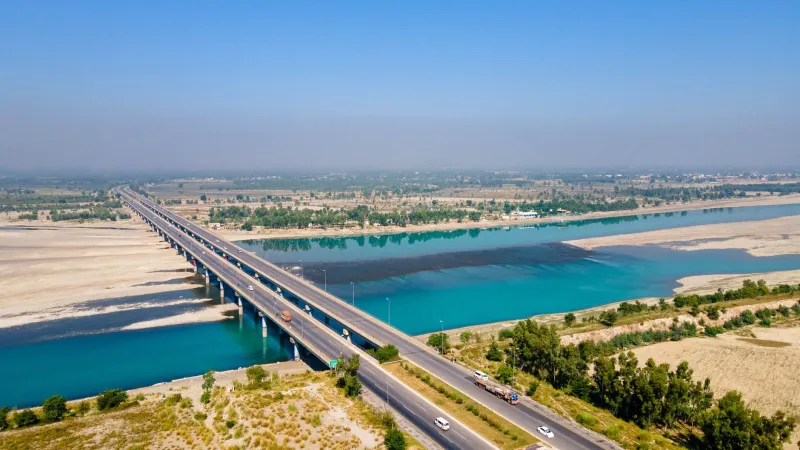
Every morning, commuters crossed it. Truckers crossed it. School buses, ambulances, and delivery vans crossed it. For decades, the bridge was simply part of the landscape — the kind of infrastructure you stop seeing after you've driven over it a few hundred times. It was maintained, lit, and plowed in winter. It existed, functionally, the way a bridge is supposed to exist.
The problem was that nobody could say, with any legal precision, who it belonged to.
The discovery came quietly, the way most bureaucratic catastrophes do: not through some dramatic moment of revelation but through a routine inspection report that flagged an anomaly in the ownership documentation. A state engineer, working through a backlog of infrastructure audits in the early 2000s, noticed that the bridge's jurisdictional assignment didn't quite line up with the physical boundary markers on either bank. He flagged it. Someone looked into it. And then the calls started.
How a Line on a Map Became a Problem
To understand what went wrong, you have to go back to the 1960s, when the bridge was originally constructed as part of a federally funded highway expansion project. Bridges that span state lines require formal jurisdictional agreements — legal documents specifying which state owns the structure, which state maintains it, and which state's laws govern activity on it. These agreements are negotiated between state transportation departments and then filed with the relevant federal authorities.
In this case, an agreement was drafted. It referenced a boundary survey conducted a few years earlier to establish the precise midpoint of the river crossing — the standard method for dividing jurisdiction on interstate bridges. Each state would own and maintain the half of the bridge on its side of the line.
The survey, however, contained an error.
The boundary line used in the agreement was drawn from a reference point that had since been corrected in updated federal cartographic data. The original survey had placed the state line approximately 340 feet from where more accurate measurements later determined it actually ran. The jurisdictional agreement, drafted from the flawed survey, assigned maintenance and ownership responsibilities based on a boundary that didn't match reality.
In practice, this meant that both states' ownership claims ended before they reached the physical center of the bridge. There was a stretch of structure — roughly two-thirds of a lane wide at the narrowest interpretation, potentially much more depending on how you read the documents — that neither state had formally claimed.
Sixty Years of Driving Over a Legal Ghost
What's remarkable isn't just that the error happened. It's that it went undetected for so long.
The bridge was resurfaced multiple times. It was widened once. It received new lighting, new guardrails, and multiple rounds of structural reinforcement. Every one of those projects was funded through state and federal appropriations, processed through transportation departments, reviewed by engineers, and signed off by officials on both sides of the border. Nobody, in any of those processes, appears to have gone back to the original boundary survey and checked its accuracy against updated cartographic data.
The jurisdictional agreement sat in filing cabinets in two state capitals, referenced but never scrutinized. The bridge was maintained — but by habit and administrative momentum rather than by any clearly defined legal obligation.
When the anomaly was finally identified, officials from both states initially responded with something close to disbelief. Transportation attorneys were brought in. Federal highway officials were consulted. Surveyors were dispatched to re-examine the boundary. And gradually, the picture came into focus: the bridge had been operating in a kind of legal limbo for more than sixty years, a piece of public infrastructure that existed in the gap between two states' paperwork.
What Happens When Nobody Owns a Bridge
The practical implications were significant enough to make transportation lawyers nervous. If neither state formally owned the disputed section, questions arose about liability in the event of an accident on that stretch. Which state's courts would have jurisdiction? Which state's traffic laws technically applied? If someone had been injured on the bridge and sued, which state's attorneys would have defended the case?
These weren't hypothetical concerns. Accident records from the bridge going back decades existed in both states' systems — but with inconsistent jurisdictional notations that, in retrospect, reflected the underlying confusion about whose road it actually was.
Federal officials, once brought into the conversation, were unhelpfully clear: the boundary question was a matter for the states to resolve between themselves. The federal government had funded the bridge's construction, but ownership and jurisdiction had always been a state-level matter. The gap in the paperwork was the states' problem to fix.
The Resolution Nobody Wanted to Publicize
The eventual fix was, in the grand tradition of bureaucratic problem-solving, deeply unglamorous. Both states entered into a revised jurisdictional agreement that used updated survey data to redefine the boundary line and reassigned ownership responsibilities accordingly. The agreement was backdated in its operational terms — meaning both states essentially agreed to pretend, for liability purposes, that the corrected boundary had always been the operative one.
Legal scholars who later examined the resolution noted that the backdating approach, while pragmatically sensible, raised its own set of unresolved questions about what it meant for historical incidents on the bridge. Those questions were quietly left open.
The bridge itself continued to carry its daily traffic load without interruption. Commuters who crossed it the morning after the new agreement was signed had no way of knowing that the structure beneath their tires had just, technically, been assigned an owner for the first time.
For sixty years, they'd been driving over a bridge that belonged to no one. Most of them still don't know.