Your Kitchen Is Full of Mistakes: Four Household Staples That Were Never Supposed to Work
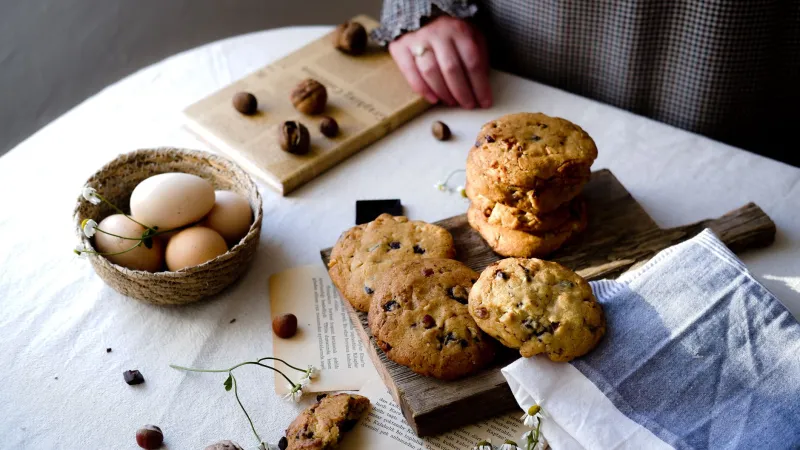
Look around your kitchen. That bag of chocolate chips? Mistake. The box of corn flakes? Also a mistake. The microwave humming away above the stove? You better believe it — mistake. Some of the most successful food inventions in American history were never planned, and the funniest part of the story isn't the accidents themselves. It's how hard the companies later worked to pretend the accidents were actually brilliant strategy.
The Cookie That Was Supposed to Melt
Start with the most famous baked good in America. In the 1930s, Ruth Wakefield ran the Toll House Inn in Whitman, Massachusetts — a real place, and yes, that's where Nestlé got the name. The standard legend says she chopped up a Nestlé chocolate bar, tossed the chunks into cookie dough expecting them to melt away, and discovered they held their shape instead.
Later researchers have poked holes in the "she was surprised" version, noting that a trained dietician like Wakefield almost certainly knew chocolate wouldn't fully dissolve. But here's the verified part: the invention was a product of an improvised, unplanned moment at a busy inn, not a research lab. And Nestlé's response was pure commerce — they struck a deal with Wakefield for the rights to print her recipe on their chocolate packaging. Her compensation? Reportedly one dollar and, allegedly, a lifetime supply of chocolate. The Toll House recipe has been printed on billions of packages since. One dollar.
The Kid Who Froze His Soda
The Popsicle's origin story is almost aggressively unglamorous. In 1905, an 11-year-old named Frank Epperson left a cup of powdered soda mix, water, and a wooden stir stick on his porch in San Francisco — overnight. It got cold. The next morning, he found a frozen soda-on-a-stick and, being eleven, thought it was great.
He didn't do anything commercial with it for nearly two decades. He kept making them for friends, then finally patented the idea in 1923 as the "Epsicle." He later sold the patent to the Joe Lowe Company, which rebranded it — reportedly at his kids' request — as the "Popsicle." So the next time you buy a box in the freezer aisle, know that you're purchasing the result of an unsupervised child's forgotten drinkware.
The Melted Candy Bar That Changed Dinner
Percy Spencer wasn't trying to invent anything in 1945. He was a Raytheon engineer touring a radar lab when he stood near an active magnetron and felt something odd in his pocket — a peanut cluster bar, melting. Curious, he sent over some popcorn kernels next. They exploded. Then he cooked an egg, which reportedly blew up in a colleague's face.
Spencer, to his credit, leaned into the accident rather than covering it up. Raytheon filed for a microwave cooking patent that same year, and the first commercial microwave oven — the Radarange — hit the market in 1947. It was about the size of a refrigerator and cost thousands of dollars. It took another twenty years of shrinking before the microwave became the countertop fixture every American kitchen takes for granted. All because a guy's snack got warm near the wrong equipment.
The Flakes That Came From a Forgotten Batch
The Kellogg brothers accidentally flaked cooked wheat left sitting out too long, rolled it flat, and found it turned into crisp sheets instead of dough. Rather than scrap it, they baked it. Corn flakes followed shortly after — and unlike the others, the aftermath here turned into a full family feud. Will Keith Kellogg commercialized the cereal, trademarked the name, and spent years in legal and personal conflict with his brother John over who invented what. The accidental breakfast spawned a billion-dollar empire and one of the messiest sibling grudges in American business history.
Why the Tidy Stories Won
Here's the pattern across all four: the messy, accidental truth was on the record first — patents, news interviews, court filings — and the polished corporate version arrived later, smoother and more flattering. Companies would much rather tell you about visionary invention than a melted candy bar or a kid's forgotten cup. But the paperwork always tells on them. Reality keeps its receipts; you just have to check the file instead of the packaging.