The Forgotten City Under Seattle That Nobody Officially Knew Was Still Down There

Seattle's underground is famous. It's a tourist destination, a piece of certified civic legend, a story told in every guidebook about how the city rebuilt itself after the Great Fire of 1889 and simply paved over the old street level, leaving the original storefronts and sidewalks to exist in a kind of suspended architectural twilight one full story below.
But here's what the tour doesn't cover.
In 1974, a crew of city utility engineers working on a sewer upgrade in the Pioneer Square neighborhood broke through a wall they weren't expecting to find — and discovered a section of the underground that wasn't documented anywhere in the city's infrastructure records. Not in the 1889 rebuilding plans. Not in the 1930s WPA survey maps. Not in the postwar utility assessments.
What they found had apparently been there, sealed and forgotten, since sometime around 1910. And nobody in the city government could immediately explain why.
How the Underground Became the Underground
To understand what was found in 1974, you need to understand how Seattle's underground came to exist in the first place — because it's one of the stranger chapters in American urban history.
After the fire of June 1889 leveled twenty-five city blocks, Seattle's leaders decided to rebuild with two significant upgrades: the streets would be regraded to improve drainage, and the entire commercial district would be raised by one to two full stories. The problem was that the buildings went up faster than the street regrading could be completed.
For several years, Seattle residents navigated a city where the sidewalks were sometimes at second-floor level, accessible by ladders, while the original street-level storefronts continued operating below. When the regrading finally caught up and the new sidewalks were sealed over, the old storefronts simply became basements — then sub-basements — then, eventually, forgotten.
By the time journalist and historian Bill Speidel started exploring them in the 1960s and launched the Underground Tour in 1965, much of the space had been mapped and documented. But not all of it.
The Section That Wasn't Supposed to Exist
The 1974 discovery happened during a routine sewer line replacement on First Avenue South. Workers following the route of an old clay pipe encountered a brick wall where the city's drawings showed open soil. When they broke through to investigate, they found a fully intact corridor — roughly twelve feet wide and running at least sixty feet before curving out of sight — with intact wood-plank flooring, remnants of shelving on the walls, and what appeared to be the rusted hardware of an old freight elevator shaft.
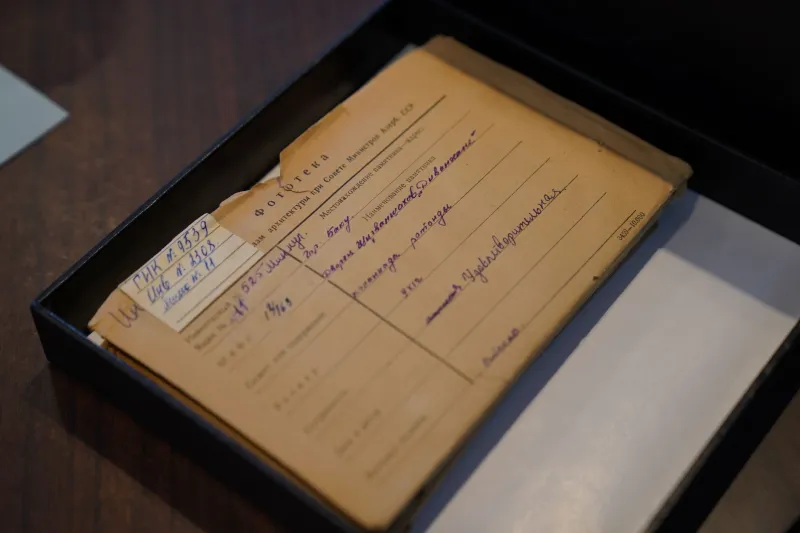
The city's engineering department photographed the space, noted it in an internal memo, and then essentially did nothing about it for two decades.
The memo, which eventually surfaced in a 1998 Seattle Times investigation into city infrastructure records, described the space as "consistent with commercial storage use, pre-1910, origin undetermined." The engineers had recommended further investigation. The recommendation was never acted on. The wall was patched. The sewer line was rerouted around it.
Why It Was Forgotten — Twice
The 1998 investigation, prompted by a historian at the University of Washington who had stumbled across the 1974 memo in the city archives, tried to piece together what the space had originally been used for.
The leading theory involves the period between 1889 and roughly 1907, when the underground storefronts were still partially in use — some as legitimate storage, some as less legitimate operations. Seattle's Pioneer Square district during that era was a dense tangle of saloons, brothels, and import businesses, many of which had strong incentives to maintain storage spaces that weren't easily inspected.
The freight elevator hardware was particularly interesting to researchers. Elevators of that type were commonly used to move goods between street-level and below-grade storage — goods that might include anything from bonded whiskey to merchandise that had slipped off a ship's manifest somewhere between Asia and the Port of Seattle.
No definitive records have ever established who built the corridor or what it stored. The space itself is no longer accessible — it was eventually incorporated into the city's utility infrastructure during a 2003 upgrade — but the photographs from 1974 still exist in the city archives.
What Makes This Story Different
Seattle isn't the only American city with forgotten underground infrastructure. Chicago has miles of old freight tunnels, most of which are now flooded. Kansas City sits on top of an enormous network of limestone caves that were used for cold storage and, briefly, as a government records facility. Portland has the infamous Shanghai Tunnels, whose history is disputed but whose existence is not.
What separates the Seattle case is the bureaucratic amnesia layered on top of the physical one. The space was found, documented, and then officially forgotten — not once, but twice. The city knew it was there. It just kept not doing anything about it.
Sometimes the most remarkable thing about a hidden room isn't what's inside it. It's how many people walked past the door and decided not to open it.
The Underground Tour still runs today, six days a week. The undocumented section isn't on the route. Most of the guides have never heard of it.