A Kansas Farmer Filed a Routine Lawsuit Against the Government — and Accidentally Won a Fortune

Most people who sue the federal government lose. Of those who win, most walk away with something modest — a corrected record, a small settlement, maybe an apology that took fifteen years to arrive. Very few walk away rich.
And essentially none of them walk away rich by accident.
This is the story of one Kansas farmer who did exactly that — not because he was clever, not because he had a brilliant legal strategy, but because the government's own paperwork was so comprehensively wrong that it accidentally gave him something worth vastly more than anything he'd asked for.
The Flood That Started Everything
In the early decades of the 20th century, the federal government was aggressively expanding its network of irrigation and water management projects across the American West and Midwest. These projects were, on the whole, genuinely beneficial — they brought water to dry farmland, supported growing agricultural communities, and helped stabilize the region's economy.
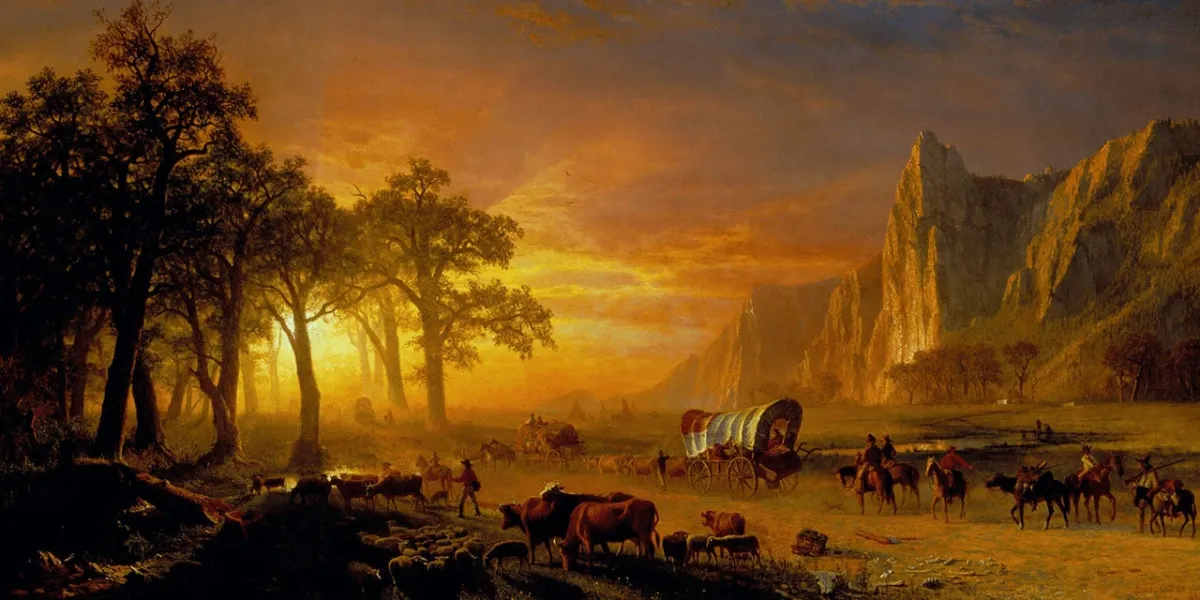 Photo: American West, via nationalcowboymuseum.org
They also, on occasion, flooded the wrong fields.
The farmer at the center of this story — call him by the description the records give him: a stubborn, methodical man who kept careful notes about everything — had been working his land in central Kansas for years when a federal irrigation project upstream began backing water onto his property. His crops suffered. Then they failed. He complained to the relevant agency. The agency was sympathetic in a bureaucratic, we'll-look-into-it sort of way, and did essentially nothing.
So he hired a lawyer and filed suit.
His claim was straightforward: the government's project had damaged his agricultural land, and he wanted compensation. He wasn't asking for the moon. The estimates in the original complaint put the damages at a few thousand dollars — serious money for a working farmer in that era, but not the kind of figure that made federal attorneys particularly nervous.
The Surveying Error Nobody Caught
Here is where the story pivots from ordinary grievance to something genuinely improbable.
As part of the legal process, both sides submitted surveys and property descriptions to establish exactly which parcels of land were affected by the flooding. This was standard procedure. It required the government's own surveyors to produce documents defining the boundaries of the disputed area — and those surveyors, working from older maps that contained their own accumulated errors, made a mistake.
A significant one.
The property description submitted in the government's own court documents — the official, legally binding description that would form the basis of any settlement or judgment — included a substantial parcel of land that was adjacent to the farmer's flooded fields but wasn't actually part of his original claim. The error was the result of a cascading series of small mistakes: a reference point misidentified on an old survey, a boundary line carried forward incorrectly, and a final document that nobody in the legal chain bothered to cross-check against the original land records.
The farmer's attorney, reviewing the government's submission, noticed the discrepancy. And then — in a decision that must have involved at least one sleepless night — he said nothing about it.
What the Land Was Actually Sitting On
The additional parcel that the government's surveyors had accidentally included in their property description wasn't particularly remarkable farmland. It was rougher terrain, less cultivated, not the kind of ground that would catch anyone's eye on first inspection.
But beneath it, geologists working in the region had already begun identifying signs of something considerably more valuable. The area sat atop a natural deposit — the specific mineral varied depending on which account you consult, but the consistent detail across the historical record is that it was the kind of subsurface resource that, once properly surveyed and extracted, was worth orders of magnitude more than the farmland above it.
When the case settled and the court documents were finalized, the farmer's mineral rights — as defined by the government's own erroneous survey — extended to include that parcel.
The Moment the Government Realized What It Had Done
Federal attorneys, by most accounts, didn't immediately grasp the significance of what had happened. The case was a small agricultural dispute in a regional court. It resolved without drama. The farmer received his compensation. The paperwork was filed.
It was only later, when the mineral value of the land became more apparent and the farmer began taking steps to assert his newly documented rights, that anyone in the relevant agencies sat down with the court documents and had the particular kind of stomach-dropping realization that comes from discovering your own office handed someone a fortune.
Efforts to challenge the settlement ran into a fundamental problem: the erroneous survey had been submitted by the government itself. The property description that awarded the mineral rights had been drafted by government surveyors and entered into the record by government attorneys. Arguing that the farmer shouldn't have those rights meant arguing that the government's own official documents were wrong — which was true, but also deeply uncomfortable to put in front of a judge.
The legal challenges went nowhere meaningful. The farmer kept his rights.
The Paperwork Always Wins
What makes this story stick — what gives it that particular strange-but-verified quality — is how thoroughly it inverts the usual relationship between ordinary citizens and federal bureaucracy.
The government's machinery is enormous, slow, and often maddening to deal with. It loses things. It misfiles things. It produces documents that contradict each other and rules that overlap in ways nobody intended. For most people, most of the time, that chaos works against them — the wrong box checked, the wrong form submitted, the wrong office contacted, and suddenly a simple request becomes a years-long ordeal.
But occasionally, just occasionally, the chaos fires in the other direction. A surveyor copies a boundary line incorrectly. An attorney doesn't catch it. A judge signs off. And a man who walked into a courthouse asking for help replanting his crops walks out, eventually, with something that changes his family's financial trajectory for generations.
He didn't outmaneuver the system. He just showed up — and the system, being what it was, did the rest.