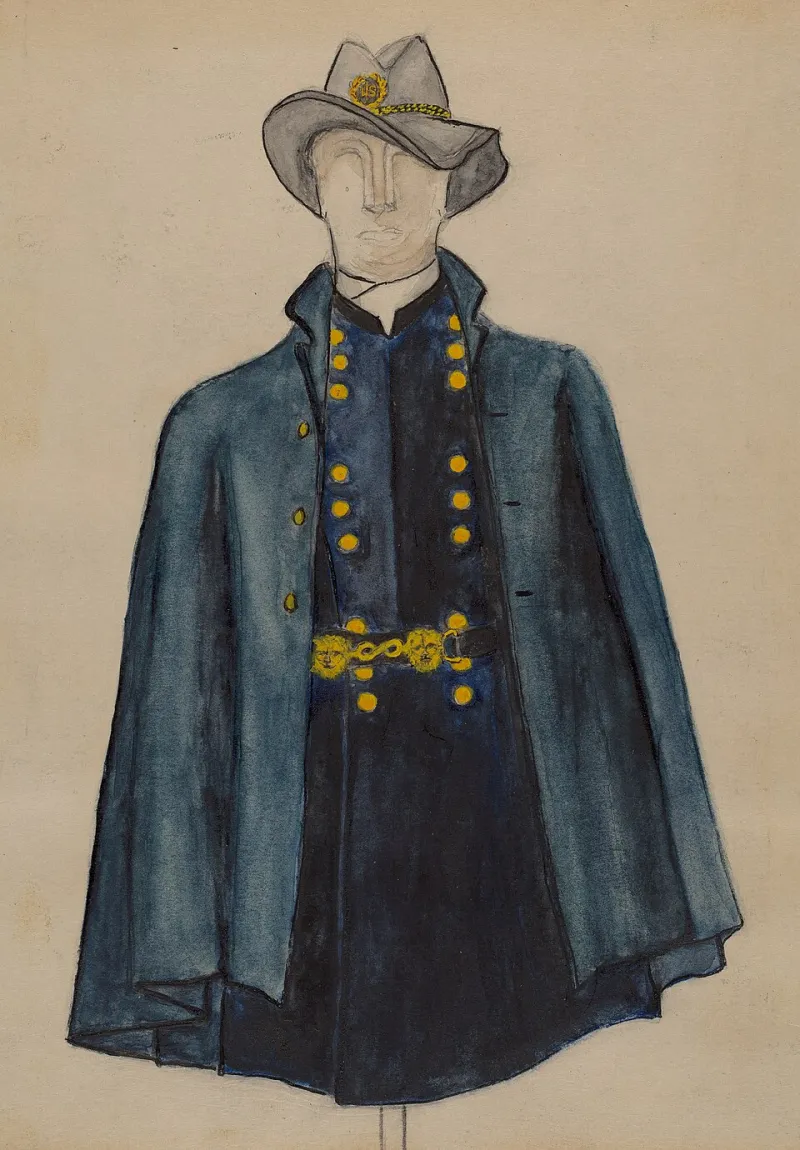
The Civil War Cannon That Became America's Most Wanted Antique
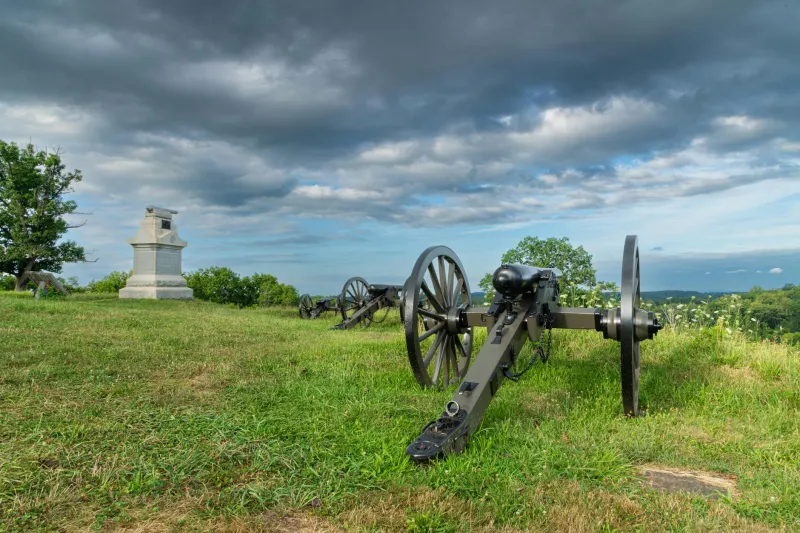
The Artillery Piece That Refused to Stay Put
In the annals of American legal history, few objects have generated more courtroom drama per pound than the bronze six-pounder that disappeared from Millfield, Pennsylvania's town square on a foggy November night in 1887.
 Photo: Millfield, Pennsylvania, via www.hobokengirl.com
What followed was a sixty-year game of legal hot potato, as the wayward cannon turned up at crime scenes, property disputes, and business deals across three states, always at the worst possible moment for whoever happened to possess it.
By the time a federal judge finally settled the matter in 1951, the cannon had been the subject of seventeen separate lawsuits, three criminal investigations, and one attempted murder.
The Disappearance That Started It All
The trouble began when Millfield's Civil War memorial cannon simply vanished overnight. The 800-pound bronze piece had been donated by the War Department in 1878 as part of a surplus distribution program, giving small towns across America their own pieces of military history.
Millfield's cannon was particularly prized because it bore the inscription "Bull Run 1861" and showed actual battle damage — a dent in the barrel from a Confederate musket ball. Local veterans gathered around it every Memorial Day to share war stories and drink ceremonial toasts.
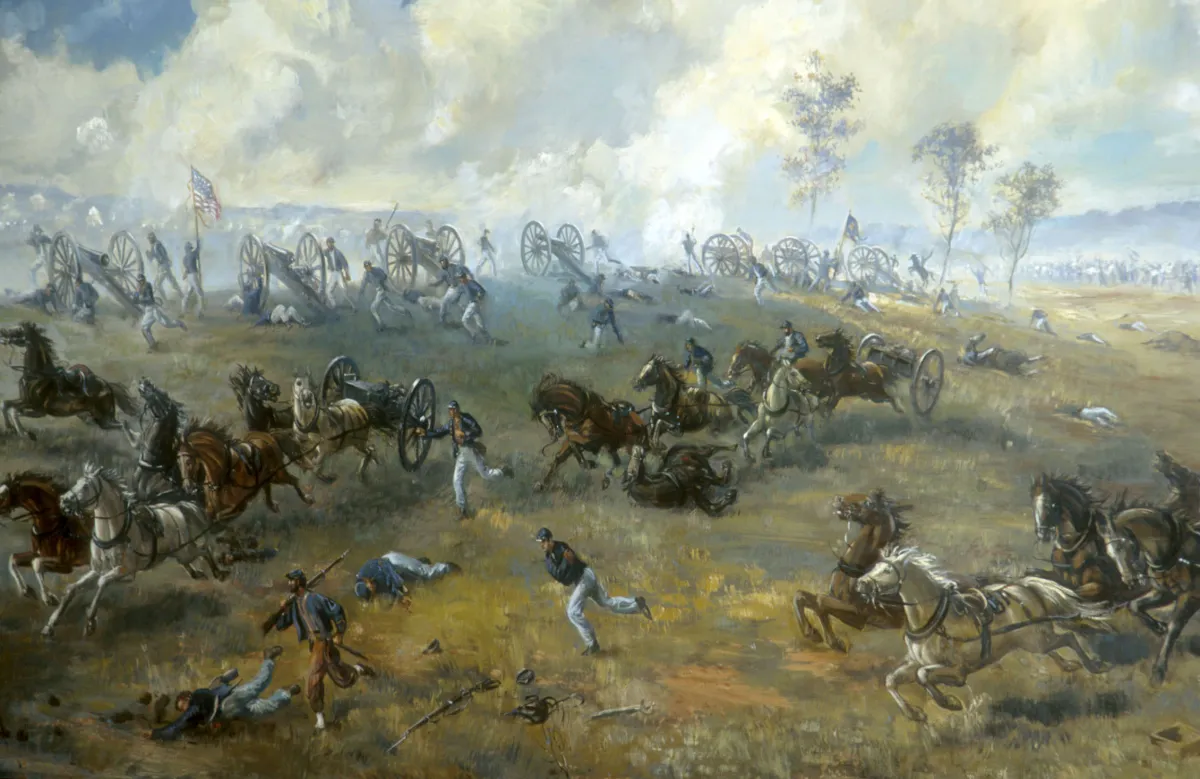 Photo: Bull Run 1861, via www.historyonthenet.com
When townspeople woke to find an empty pedestal and wheel ruts leading toward the county road, suspicion immediately fell on Millfield's neighbors. The nearby town of Brookville had been lobbying the War Department for their own cannon, and several witnesses claimed to have seen "suspicious wagon activity" the night before.
Brookville's mayor indignantly denied the accusation, pointing out that his town would hardly steal a cannon only to display it twenty miles away where everyone would recognize it.
He was right, but for the wrong reasons.
The First Sighting: Bootleggers and Bronze
The cannon's first confirmed appearance came in 1923, during a Prohibition raid on a suspected distillery in rural Ohio. Federal agents discovered the artillery piece being used as an elaborate still, its barrel packed with copper tubing and its carriage converted into a mash tun.
The bootlegger, one Jimmy "Cannonball" Morrison (no relation to the Montana cartographer), claimed he'd bought the piece from a scrap dealer in 1919. He had no documentation, but insisted he'd paid fair market value for "surplus military equipment."
When Pennsylvania authorities learned about the discovery, they immediately filed papers to reclaim their stolen memorial. Ohio prosecutors argued that the cannon was evidence in a federal crime and couldn't be released until Morrison's trial concluded.
Morrison's trial lasted eight months, during which the cannon sat in an evidence warehouse in Cleveland. When Morrison was finally convicted, Pennsylvania's claim seemed clear — until Morrison's defense attorney produced a bill of sale showing that Morrison had purchased the cannon from someone who'd bought it legitimately from the U.S. War Department's surplus division.
The paperwork was genuine. Somehow, the War Department had sold Millfield's memorial cannon without realizing it was Millfield's memorial cannon.
The Legal Maze That Nobody Could Navigate
What followed was a legal scholar's nightmare. Pennsylvania claimed ownership based on the original 1878 donation. The federal government claimed ownership because the War Department had never formally transferred title to Millfield. Morrison's creditors claimed ownership because the cannon was his most valuable asset when he declared bankruptcy.
Meanwhile, the cannon sat in legal limbo in Cleveland, accumulating storage fees at $3 per month.
The case might have dragged on indefinitely, but in 1925, someone stole the cannon from the evidence warehouse. Again.
The Salvage Yard Standoff
The cannon's next appearance was even more dramatic. In 1934, it turned up at Kowalski Brothers Salvage (yes, the same family that had tried to homestead in non-existent Jerryville) in Detroit, where it was being used as a decorative anchor for the company's front gate.
Stanley Kowalski Jr. claimed his father had bought the piece from a traveling scrap dealer in 1928. He had no paperwork, but pointed out that possession was nine-tenths of the law.
Unfortunately for Kowalski, Pennsylvania had never stopped looking for their cannon. When state investigators arrived in Detroit with a court order, they found themselves in a three-way standoff with Michigan authorities (who claimed the cannon was evidence in a theft case) and federal agents (who maintained that the government had never legally disposed of the piece).
The standoff lasted six weeks, during which the cannon sat chained to Kowalski's fence while lawyers from three states argued over who had jurisdiction.
The deadlock was broken when someone — probably Kowalski — sold the cannon to a traveling circus for $50 cash. By the time the various legal teams sorted out their jurisdictional disputes, the cannon was somewhere in Iowa with Barnum's Traveling Menagerie.
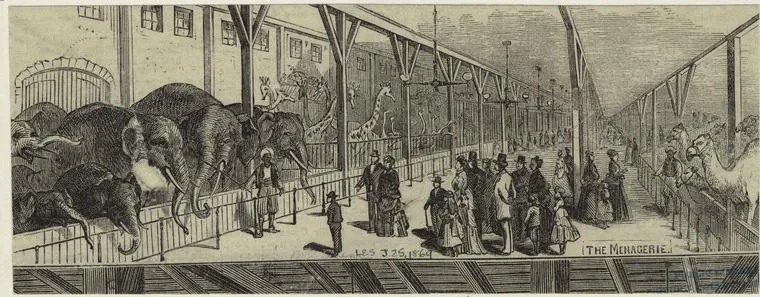 Photo: Barnum's Traveling Menagerie, via ephemeralnewyork.wordpress.com
The Circus Years and the Property Line War
The cannon spent the next decade as a prop in various traveling shows, usually advertised as "Genuine Civil War Artillery — See the Weapon That Won the War!" Circus records show it changed hands at least six times between 1934 and 1943, often as payment for gambling debts or back wages.
In 1943, the cannon finally settled down when circus owner "Big Bill" Murphy used it as collateral for a land purchase in rural Virginia. Murphy defaulted on the loan, and the cannon became the property of local farmer Ezra Hutchins.
Hutchins used the cannon as a fence post, welding it to a gate that marked the boundary between his property and his neighbor's. This arrangement worked fine until 1947, when a surveyor discovered that the original property line had been drawn incorrectly.
According to the new survey, the cannon — and the gate it was attached to — sat squarely on neighbor Harold Vance's land.
What followed was the most expensive property dispute in Virginia legal history. Hutchins claimed the cannon by right of possession and improvement. Vance claimed it came with the land. Both men hired lawyers and began what local newspapers called "The Battle of Hutchins' Gate."
The case was complicated by the fact that Pennsylvania was still actively searching for the cannon, having never dropped their original theft charges from 1887.
The Federal Solution That Satisfied Nobody
In 1951, a federal judge named William Crawford finally brought all parties together in Richmond for what he called "the most ridiculous property dispute in American legal history."
Crawford's solution was elegant in its simplicity: he ruled that the cannon belonged to whoever could prove they'd legally acquired it from its last legitimate owner.
The last legitimate owner, Crawford determined, was the U.S. War Department in 1878. Since the War Department had never properly transferred title to anyone, the cannon still belonged to the federal government.
Crawford ordered the cannon returned to federal custody, where it would be "disposed of through proper channels."
Those proper channels led straight back to Millfield, Pennsylvania, where the War Department donated the cannon to the town's memorial committee in a formal ceremony on Memorial Day 1952.
The Homecoming That Almost Wasn't
Millfield's celebration was short-lived. When the cannon arrived, local veterans immediately noticed something wrong: this wasn't their original cannon.
The inscription read "Bull Run 1862" instead of "Bull Run 1861." The battle damage was in the wrong place. Most telling, this cannon was made of iron, not bronze.
Sometime during its sixty-year odyssey, the original cannon had been swapped for a similar but different piece. The bronze six-pounder with the distinctive Confederate musket ball dent was still out there somewhere.
Millfield's veterans, now in their seventies and eighties, decided they'd had enough legal drama for one lifetime. They accepted the replacement cannon and held their Memorial Day ceremony as planned.
But local legend holds that the real Millfield cannon is still out there, probably serving as a fence post or garden decoration for someone who has no idea they own the most legally contentious piece of Civil War surplus in American history.
The Precedent That Changed Everything
The Millfield cannon case established important precedents for military surplus disposal and municipal property rights. Federal agencies now require detailed documentation before transferring historic artifacts, and municipalities must register their war memorials with the National Park Service.
But perhaps the most important lesson was simpler: sometimes the cost of recovering stolen property exceeds the value of what was stolen. By 1951, the various legal proceedings had cost more than $50,000 — enough to buy several dozen replacement cannons.
As Judge Crawford noted in his final ruling: "This case demonstrates that the law, like artillery, can cause considerable damage even when aimed at legitimate targets."
The replacement cannon still sits in Millfield's town square, where local veterans gather every Memorial Day to share stories and drink ceremonial toasts. They just don't mention that their memorial might not be the same one their grandfathers dedicated in 1878.
Some mysteries are better left unsolved.