The Maritime Giant That Played Lifeguard: When a Sperm Whale Saved an Entire Fishing Crew
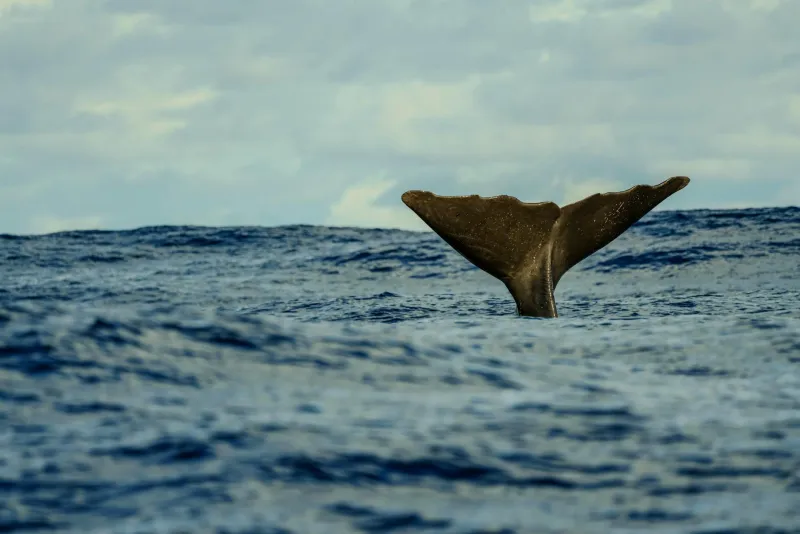
Picture this: you're on a sinking fishing boat off the Massachusetts coast, waves crashing over the deck, when suddenly a 50-foot sperm whale surfaces next to you and starts ramming your vessel. Your first thought probably isn't "thank goodness, we're saved."
But that's exactly what happened to the crew of the Sarah Catherine on a foggy October morning in 1892, in what maritime historians now call one of the most documented cases of whale-assisted rescue in American waters.
When Moby Dick Becomes Your Guardian Angel
Captain Jeremiah Howland and his four-man crew had been working the fishing grounds about twelve miles southeast of Cape Cod when their aging schooner began taking on water faster than they could bail it out. The boat's hull, weakened by years of hard use, had finally given way in the rough autumn seas.
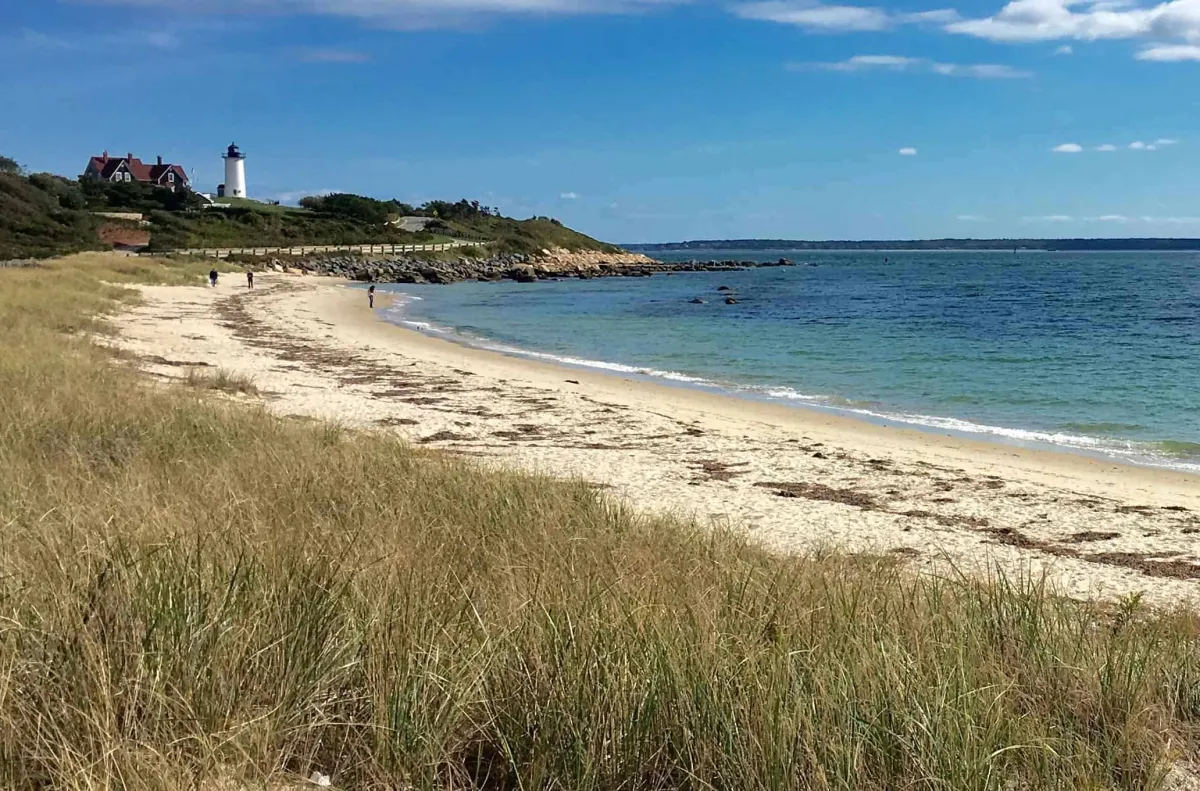 Photo: Cape Cod, via www.platinumpebble.com
As the Sarah Catherine listed dangerously to starboard, the crew spotted what they later described as "the largest whale any of us had ever seen" approaching from the northeast. The massive sperm whale, estimated at nearly 60 feet long, began what the crew initially interpreted as aggressive behavior—repeatedly bumping against the hull with its enormous head.
"We thought our time had come," Howland wrote in his official report to the Gloucester Harbor Authority. "Here we were, boat going down, and now this leviathan was fixing to finish us off proper."
But something strange was happening. Instead of attacking, the whale seemed to be... helping.
The Rescue That Defied All Logic
For nearly three hours, the whale maintained a steady position alongside the sinking vessel, using its massive body to keep the boat from capsizing completely. Every time the Sarah Catherine threatened to roll over, the whale would surface and gently push against the hull, stabilizing the craft.
Even more remarkably, the whale began what witnesses described as "nudging" the boat in a specific direction—toward the main shipping lane that connected Boston to the Maritime Provinces. Contemporary accounts from other vessels in the area confirm that the whale appeared to be deliberately guiding the distressed boat toward busier waters.
"That whale knew something we didn't," recalled crew member Thomas Brennan in a 1943 interview with the Boston Globe, fifty years after the incident. "Every time we'd drift off course, it would come around and bump us back on track. Like it had a compass in its head."
The whale's strategy worked. The merchant steamship Portland Express, bound for Nova Scotia, spotted the distressed vessel and its unlikely escort around 2 PM. The steamship's captain, Robert MacKenzie, later wrote in his log that he had never seen anything like it: "A whale of extraordinary size maintaining station alongside a sinking fishing boat, appearing to render assistance."
The Science Behind the Miracle
Modern marine biologists have several theories about what might have motivated the whale's behavior. Dr. Sarah Jennings of the Woods Hole Oceanographic Institution points to documented cases of sperm whales exhibiting what researchers call "interspecies altruism."
 Photo: Woods Hole Oceanographic Institution, via cdn.prod.website-files.com
"Sperm whales have highly developed social structures and problem-solving abilities," Jennings explains. "They've been observed helping other marine species in distress, though cases involving humans are extraordinarily rare."
Another possibility involves the whale's echolocation abilities. Sperm whales can "see" underwater structures with remarkable precision using biosonar. The whale may have detected that the boat's hull was compromised and recognized the crew's distress through their movements and vocalizations.
"What's particularly fascinating about the Sarah Catherine incident is the apparent strategic thinking involved," notes maritime historian Dr. Robert Kellner of Boston University. "The whale didn't just provide physical support—it actively guided the vessel toward rescue."
The Story That Almost Disappeared
Despite being well-documented at the time, with official reports filed by both the fishing crew and the rescue vessel, the story of the helpful whale gradually faded from maritime records. For decades, it existed only in scattered newspaper clippings and family stories passed down through generations of New England fishing families.
The incident was rediscovered in 1987 when Boston Public Library archivist Margaret Chen was digitizing historical maritime documents. Chen found Captain Howland's original handwritten report, along with corroborating testimony from the Portland Express crew, buried in a collection of routine harbor authority paperwork.
"Nobody had deliberately hidden the story," Chen explains. "It just got lost in the shuffle of bureaucratic filing. These were practical fishermen reporting what they saw, not people trying to create a legend."
A Hero Without Recognition
The whale that saved the Sarah Catherine never received any formal recognition—how do you award a medal to a sperm whale?—but the story has taken on new life among marine researchers studying whale intelligence and behavior.
Captain Howland lived until 1934 and reportedly never stopped talking about his encounter with what he called "the whale that wouldn't let us die." His great-grandson still operates a fishing boat out of Gloucester and keeps a copy of the original rescue report in his wheelhouse.
As for the whale itself, it was never seen again after the rescue. It simply disappeared back into the depths of the Atlantic, leaving behind one of the most extraordinary examples of interspecies cooperation in maritime history.
Sometimes the most unbelievable rescues come from the most unexpected heroes—even when they weigh 40 tons and have teeth the size of bananas.