
When Genius Takes a Left Turn
Thomas Edison invented the light bulb, the phonograph, and the motion picture camera. He held 1,093 patents and fundamentally changed how humans live, work, and communicate. So when he announced in 1920 that his next project would be a machine to talk to dead people, the world faced an uncomfortable question: do you dismiss the claims of history's greatest inventor, or do you take them seriously?
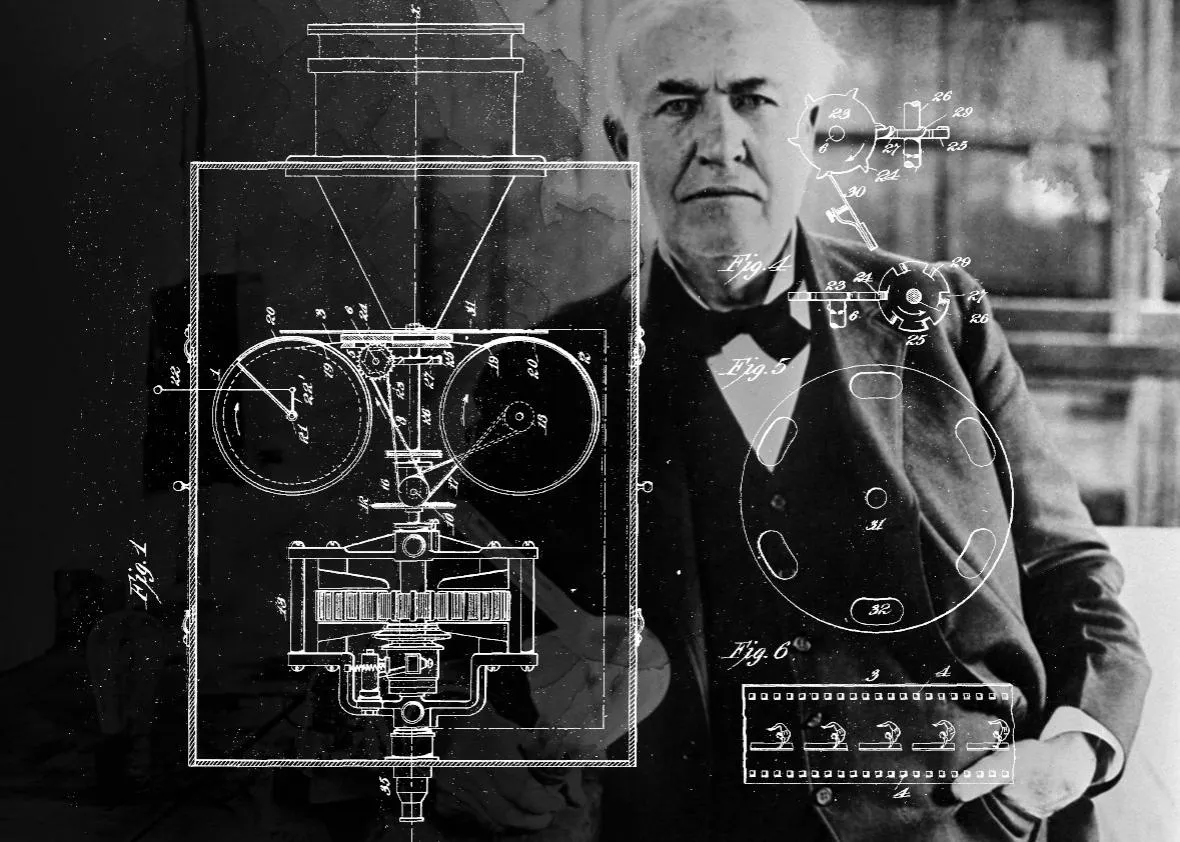 Photo: Thomas Edison, via compote.slate.com
The answer, as it turned out, was both.
The Interview That Started Everything
It began with what should have been a routine magazine profile. B.C. Forbes, founder of Forbes magazine, was interviewing the 73-year-old Edison about his latest work when the conversation took an unexpected turn. Edison began discussing his theory that human personality might survive death in some measurable form.
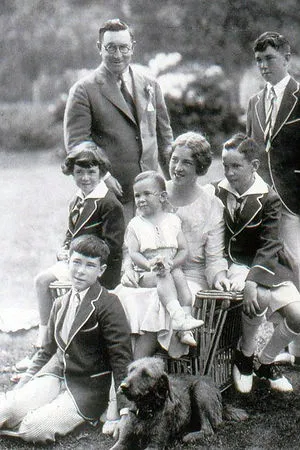 Photo: B.C. Forbes, via static.wixstatic.com
"I have been at work for some time building an apparatus to see if it is possible for personalities which have left this earth to communicate with us," Edison told the startled journalist. "If this is ever accomplished, it will be accomplished, not by any occult, mystifying, mysterious, or weird means, such as are employed by so-called mediums, but by scientific methods."
Forbes published the interview in October 1920, and all hell broke loose.
The Wizard's Scientific Séance
Edison wasn't talking about crystal balls or Ouija boards. He described his proposed device in characteristically technical terms: an ultra-sensitive apparatus that could detect the slightest movements, sounds, or energy fluctuations that might represent attempts at communication from "the other side."
The machine would be so delicate, Edison explained, that it could register forces far too subtle for human senses to perceive. If spirits existed and wanted to communicate, they would presumably find it easier to manipulate a precision scientific instrument than to move furniture around or speak through mediums.
"Our apparatus will give the spiritual entity a far better opportunity to express itself than the tilting tables and raps and other crude methods now purported to be the only means of communication," Edison declared with typical confidence.
The Problem with Believing Edison
The scientific community found itself in an impossible position. On one hand, Edison was clearly describing something that sounded like spiritualist nonsense — the kind of thing serious scientists had been debunking for decades. On the other hand, this was Thomas Edison talking.
The man had a track record of announcing seemingly impossible inventions that somehow worked. He'd promised to capture sound waves and play them back (the phonograph), to make light from electricity (the incandescent bulb), and to record moving pictures (the kinetoscope). Skeptics had dismissed all of these ideas as fantasy — until Edison made them reality.
So when America's most celebrated inventor started talking about spirit communication, even hardened skeptics had to wonder: what if he's onto something?
The Patent Office Dilemma
Rumors began circulating that Edison had actually filed patent applications for his spirit communication device. Patent examiners found themselves facing an unprecedented question: how do you evaluate the scientific merit of a machine designed to talk to ghosts when it's submitted by the most successful inventor in American history?
The U.S. Patent Office had clear guidelines about rejecting applications for "perpetual motion machines" and other scientifically impossible devices. But Edison's proposed apparatus didn't violate any known laws of physics — it was simply based on unproven assumptions about the nature of consciousness and death.
Office discussions reportedly grew heated as examiners debated whether Edison's reputation earned him the benefit of the doubt or made his claims more dangerous to scientific credibility.
The Media Circus
Newspapers across the country picked up the story, often with sensational headlines like "Edison to Speak with Spirits!" and "Death No Barrier to Great Inventor!" The coverage ranged from breathless excitement to withering skepticism, but everyone was talking about it.
Spiritualists hailed Edison as validation of their beliefs. Religious leaders denounced him for meddling with forces beyond human understanding. Scientists scrambled to distance themselves from the whole affair while secretly wondering what the Wizard of Menlo Park might have discovered.
 Photo: Menlo Park, via backyardalabama.com
The story became international news when European newspapers picked it up, leading to a flood of letters from inventors, mediums, and curious citizens around the world.
The Colleagues Who Knew Better
People close to Edison began offering alternative explanations for his sudden interest in spirit communication. Some suggested he was still grieving the recent death of his first wife, Mary. Others pointed out that he'd always been fascinated by the mysteries of consciousness and memory.
A few colleagues suspected Edison might be conducting an elaborate publicity stunt, designed to generate interest in his other projects. After all, the man was a master showman who understood the value of keeping his name in the headlines.
But those who worked with him daily insisted he seemed genuinely committed to the project, spending long hours in his laboratory working on unspecified "sensitive instruments."
The Apparatus That Never Was
Despite years of supposed work, Edison never publicly demonstrated his spirit communication device. No working prototype was ever found among his effects after his death in 1931. No detailed plans or specifications survived in his extensive laboratory notes.
This absence of evidence led many to conclude that the whole thing had been either a hoax, a publicity stunt, or the product of an aging mind losing its scientific rigor. But others wondered if Edison had simply decided that some inventions were too dangerous — or too unsuccessful — to release.
The Questions That Remain
Modern Edison scholars continue to debate what really happened with the spirit phone. Some argue that he was genuinely exploring the boundaries between physics and metaphysics, using his scientific method to investigate claims that others simply dismissed. Others suggest he was testing public reaction to the idea, perhaps planning a device that would debunk spiritualist claims once and for all.
The most intriguing theory is that Edison actually succeeded in building something — just not what he expected. Some researchers speculate that his "spirit communication" experiments might have led to discoveries about electromagnetic fields, radio waves, or other phenomena that he chose to pursue through conventional channels instead.
The Legacy of a Failed Invention
Edison's spirit phone never materialized, but the controversy it generated revealed something fascinating about the relationship between scientific authority and public belief. When a proven genius endorses an impossible idea, it forces society to grapple with uncomfortable questions about expertise, credibility, and the limits of human knowledge.
The episode also demonstrated Edison's willingness to risk his reputation in pursuit of answers to fundamental questions. Whether he was investigating genuine phenomena or chasing shadows, he approached the unknown with the same systematic curiosity that had produced his greatest successes.
In the end, perhaps that's the real lesson of Edison's spirit phone: even failed experiments can succeed in pushing the boundaries of what we're willing to consider possible. Sometimes the most important discoveries come from asking questions that everyone else thinks are too crazy to pursue.
After all, before Edison, the idea of recording sound seemed just as impossible as talking to the dead.