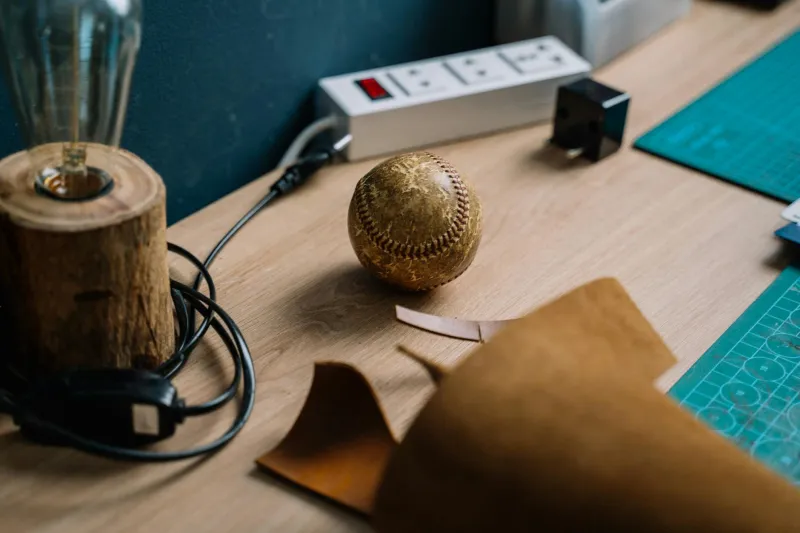
When Federal Lawyers Met Their Match: Eau de Baseball
There are few smells as distinctively American as a brand-new baseball fresh from the factory — that combination of leather, cork, rubber, and possibility that's launched a thousand childhood dreams. In 1994, someone at Major League Baseball headquarters had what seemed like a brilliant idea: why not trademark that smell?
 Photo: Major League Baseball, via static.wixstatic.com
What followed was one of the most expensive lessons in sensory law the U.S. government has ever conducted, involving teams of lawyers, chemists, and very confused patent examiners trying to figure out how you legally define the essence of America's pastime.
The Scent That Started It All
The whole saga began when Rawlings, MLB's official baseball manufacturer, introduced a new leather treatment process that created what they claimed was a superior, more consistent aroma in their baseballs. This wasn't just marketing fluff — the company had genuinely invested in developing a chemical process that would make every baseball smell exactly the same.
MLB executives, flush with licensing revenue from everything from team logos to stadium naming rights, saw dollar signs. If they could trademark the smell of a baseball, they could potentially control how sporting goods companies manufactured and marketed their products. It was intellectual property law meets sensory experience, and nobody had any idea what they were getting into.
The Patent Office Meets Its Match
The U.S. Patent and Trademark Office had been accepting scent trademarks since 1990, when they approved a floral fragrance for sewing thread. But those early cases involved perfumes and clearly artificial scents — things that could be described in chemical terms. A baseball's smell was different. It wasn't one ingredient; it was a complex bouquet created by multiple materials interacting over time.
Patent examiner Margaret Chen drew the short straw and became the federal government's point person for defining what a baseball should smell like. Her job was to determine whether MLB's scent was distinctive enough to deserve trademark protection and whether it could be described with sufficient precision to be legally enforceable.
Chen later described the assignment as "like trying to write a symphony in legal language."
The Science of Scent Law
To trademark a smell, you need to prove three things: it's distinctive, it's not functional (meaning the scent doesn't serve a practical purpose), and it can be described clearly enough that others can understand what's protected.
MLB hired a team of chemists from Northwestern University to break down their baseball's aroma into its component parts. The resulting 47-page chemical analysis identified over 200 distinct compounds contributing to the scent, including traces of lanolin from the leather, rubber polymers from the core, and various adhesives used in manufacturing.
 Photo: Northwestern University, via wallpapers.com
But here's where things got weird: the chemists discovered that the "new baseball smell" wasn't actually from the new materials. It was created by how those materials aged and interacted during the first few weeks after manufacturing. The scent MLB wanted to trademark was essentially the smell of controlled decomposition.
The Description Problem
Trying to describe a smell in legal language turned out to be like trying to explain color to someone who's never seen. MLB's lawyers submitted their initial application describing the scent as "the distinctive aroma of leather, cork, and rubber characteristic of a new baseball."
The Patent Office rejected it immediately. Too vague.
The second attempt included the full chemical breakdown, creating a legal document that read like a chemistry textbook: "The distinctive olfactory combination of 4-methylpentanoic acid, benzyl acetate, and trace amounts of formaldehyde resulting from the interaction of treated leather with natural cork and synthetic rubber compounds."
Rejected again. Too technical for trademark examiners to verify.
The third attempt tried a middle ground: "The warm, leathery, slightly sweet aroma with subtle notes of natural cork that consumers associate with authentic baseballs manufactured according to official specifications."
Still too vague, according to the Patent Office.
The Smell Test Nobody Could Pass
By year two of the application process, the Patent Office was conducting what they officially called "olfactory examinations." Patent examiners were literally sitting in conference rooms smelling baseballs and trying to determine whether they could distinguish MLB's trademarked scent from generic sporting goods.
The results were embarrassing for everyone involved. In blind smell tests, even MLB executives couldn't consistently identify their own trademarked baseballs versus competitors' products. Worse, the same baseball would smell different to different people, and the scent changed depending on humidity, temperature, and how long the ball had been stored.
The Million-Dollar Nose Dive
After three years and an estimated $1.2 million in legal fees, research costs, and government processing time, MLB quietly withdrew their application in 1997. The official reason was "insufficient distinctiveness," but internal documents later revealed the real problem: nobody could figure out how to write a smell trademark that would hold up in court.
The Patent Office learned its lesson too. In 1998, they issued new guidelines for scent trademarks that essentially made it impossible to trademark naturally occurring smells or complex aromas created by manufacturing processes.
The Lingering Questions
The baseball smell case became a cautionary tale in intellectual property law, cited in legal textbooks as an example of how some aspects of human experience simply can't be reduced to legal language. But it also raised fascinating questions about the nature of trademark protection in an increasingly complex marketplace.
Today, you still can't trademark the smell of a baseball, but you can trademark synthetic scents, perfumes, and other artificially created aromas. The line between what's protectable and what belongs to the commons remains as fuzzy as the description of a new baseball's distinctive scent.
Sometimes the most American thing about baseball isn't that you can trademark it — it's that you can't.