The Town That Refuses to Stay Dead
Most ghost towns die once and stay buried. Esperanza, Nevada has turned municipal death and resurrection into an art form, officially ceasing to exist four separate times since 1923, only to spring back to legal life whenever circumstances demand it. It's like watching a bureaucratic zombie movie, except the zombies are town charters and the graveyard is the Nevada Secretary of State's office.
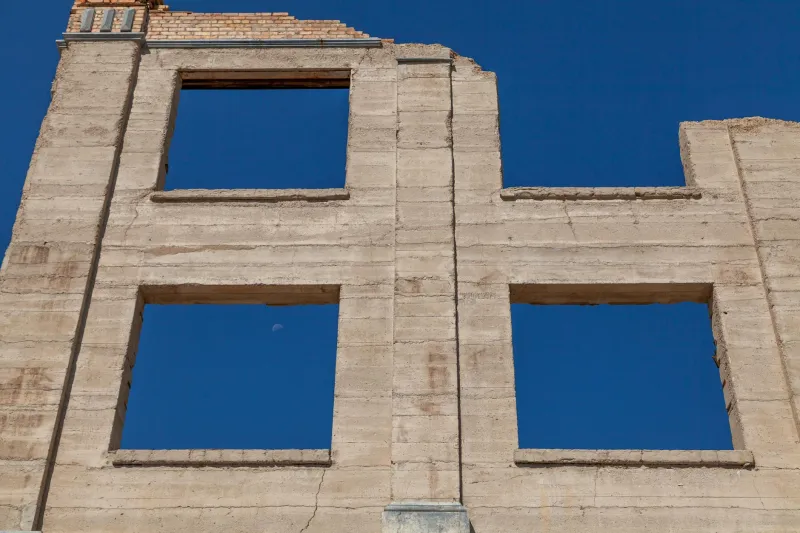
 Photo: Esperanza, Nevada, via thecaptainscoffee.com
Located roughly 60 miles northeast of Las Vegas in what locals generously call "the scenic part of nowhere," Esperanza has mastered the peculiar skill of timing its legal deaths and rebirths to coincide with economic necessity. It's not intentional — at least, that's what everyone claims.
 Photo: Las Vegas, via kellystilwell.com
Death Number One: The Copper Crash of 1923
Esperanza was founded in 1919 around a copper mine that promised to make everyone rich. When copper prices collapsed in 1923, the mine closed, most residents left, and the remaining 47 people discovered they couldn't afford to maintain their municipal charter. The town council met one last time in September 1923, voted to dissolve the incorporation, and mailed the paperwork to Carson City.
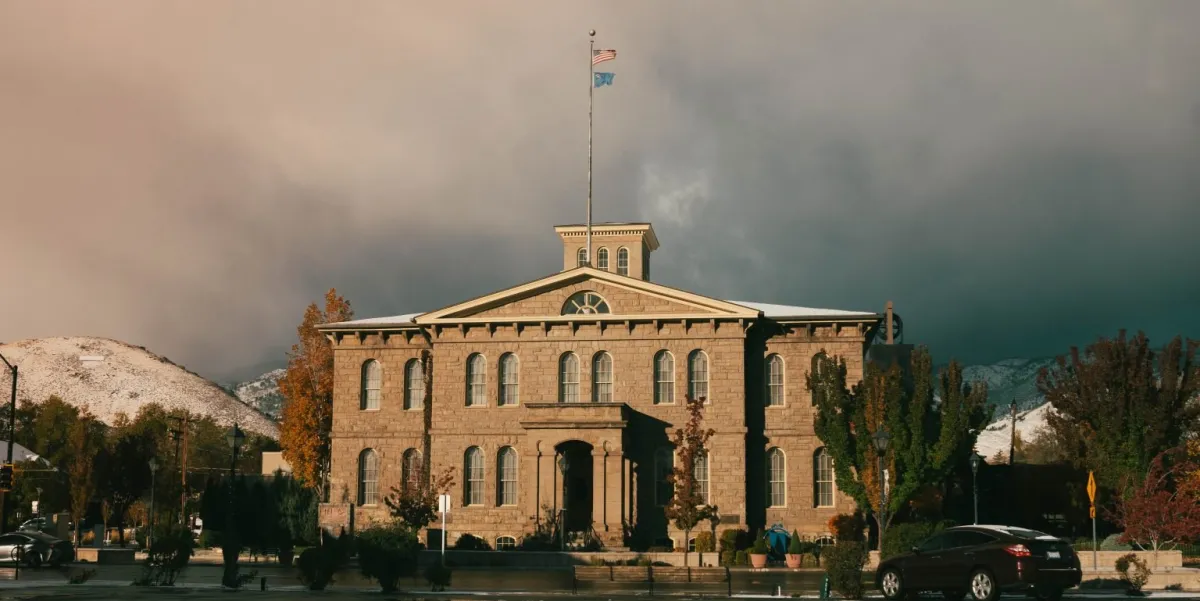 Photo: Carson City, via visitcarsoncity.com
Esperanza was officially dead.
But here's where the Nevada bureaucracy showed its peculiar character: the dissolution paperwork got lost in a filing cabinet for three years. During that time, the few remaining residents continued receiving mail, paying property taxes to a non-existent municipality, and even held a town meeting to discuss fixing the water pump.
Nobody realized they were living in a legal ghost town until 1926, when a traveling judge arrived to settle a property dispute and discovered there was no actual town to hold court in.
Resurrection Number One: The Bootlegger's Blessing
The same property dispute that revealed Esperanza's legal death also created the need for its resurrection. During Prohibition, the town's remote location had made it popular with bootleggers running liquor from Mexico to Las Vegas. But bootleggers, it turns out, needed legitimate municipal services — specifically, a justice of the peace who could officiate marriages, settle business disputes, and provide the veneer of legality their operations required.
In 1927, a group of "businessmen" (whose business was primarily liquid and illegal) petitioned Nevada to re-incorporate Esperanza. They even paid the back taxes the dissolved town owed. The state, either oblivious to or unconcerned with their motivations, approved the incorporation.
Esperanza lived again.
The Pattern Emerges
What happened next established the pattern that would repeat for the next century. Esperanza thrived modestly during Prohibition, providing just enough legitimate municipal services to justify its existence while serving as a waystation for less legitimate enterprises.
When Prohibition ended in 1933, the economic foundation disappeared almost overnight. By 1934, the town couldn't afford to maintain its charter again. The council voted to dissolve, filed the paperwork properly this time, and Esperanza died its second legal death.
But the Nevada filing system had other ideas. The dissolution was approved and recorded, but due to a clerical error, the town's business license remained active. For eight years, Esperanza existed in bureaucratic limbo — legally dissolved but still licensed to conduct municipal business.
World War II: Death and Resurrection Number Two
The federal government discovered Esperanza's zombie status in 1942 when they needed to acquire land for a military training facility. You can't buy land from a town that doesn't exist, but you also can't ignore a municipality that's still paying licensing fees.
Rather than sort out the paperwork mess, the War Department convinced Nevada to officially resurrect Esperanza just long enough to complete the land sale, then immediately dissolve it again. The entire cycle — resurrection, land sale, dissolution — took six weeks.
Esperanza had perfected the art of bureaucratic reincarnation.
The Atomic Age: Death Number Three and the Uranium Boom
Esperanza stayed legally dead from 1942 until 1955, when uranium prospectors discovered significant deposits in the surrounding hills. Suddenly, the area needed municipal services again — water rights, mining permits, and a local government that could negotiate with federal agencies.
The surviving longtime residents, now joined by uranium speculators, petitioned for re-incorporation. Nevada approved it without question. They'd been through this before.
The uranium boom lasted until 1962, when the market collapsed and the mines closed. By 1963, Esperanza was dissolving itself again, making it three legal deaths in four decades.
The Modern Era: Solar Power and Resurrection Number Three
Esperanza remained dead from 1963 until 1998, existing only as a cluster of abandoned buildings and a few stubborn residents who refused to leave. But the late 1990s brought a new economic opportunity: solar power.
Energy companies scouting locations for solar farms discovered that Esperanza's remote desert location, existing electrical infrastructure, and complete lack of municipal regulations made it perfect for large-scale solar development. But they needed local government cooperation to secure permits and tax incentives.
Once again, economic necessity triggered legal resurrection. Esperanza incorporated for the fourth time in 1999, with a town council consisting entirely of solar industry representatives and longtime residents who'd been waiting 36 years for their town to come back to life.
The Current Status: Waiting for Death Number Four
As of 2024, Esperanza is very much alive, legally speaking. The solar farms provide enough tax revenue to maintain municipal services for the town's 127 residents, and the council meets monthly in the combination town hall/general store/post office.
But locals are already watching for signs of the next economic shift. Solar technology keeps improving, making older installations less profitable. Federal energy policies change. Markets evolve.
Mayor Patricia Gonzalez, whose family has lived through three of Esperanza's deaths and resurrections, keeps the dissolution paperwork in her desk drawer. "Just in case," she says. "We've gotten pretty good at this."
The Lesson of Esperanza
Esperanza's cyclical life-and-death story reveals something fascinating about American municipal law: towns can exist in a bureaucratic space between life and death, disappearing and reappearing as economic conditions demand. It's democracy as performance art, with the Nevada Secretary of State as an unwitting stage manager.
The residents have learned to view their town's legal mortality with a mixture of pragmatism and dark humor. They know Esperanza will probably die again someday, and they know it will probably come back when circumstances require it.
After all, they've been through this before. Death, in Esperanza, is just another municipal service.