Uncle Sam's Billion-Dollar Plan to Pay Farmers for Growing Absolutely Nothing
The Economics of Emptiness
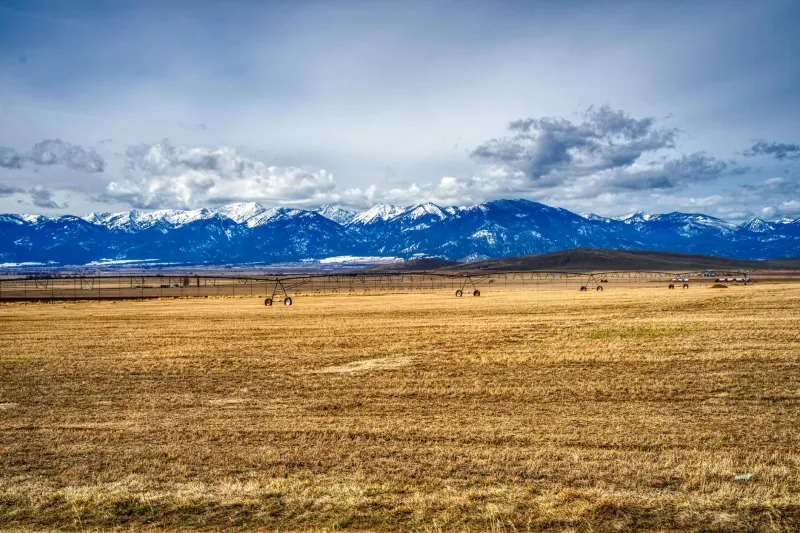
In 1985, Congress passed a law that sounds like economic satire: the Conservation Reserve Program (CRP), which pays farmers to grow absolutely nothing on millions of acres of farmland. Not reduced crops, not alternative crops — literally nothing. Farmers receive annual payments to plant grass, let weeds grow, and watch their fields return to nature. The program has cost taxpayers over $50 billion since its inception, and agricultural economists almost universally praise it as a brilliant success.
When Overproduction Became the Enemy
The roots of paying for agricultural inaction stretch back to the Great Depression, when American farmers faced a devastating paradox: they were producing too much food. Massive harvests drove prices so low that farmers couldn't cover their costs, leading to widespread bankruptcy and rural economic collapse.
The federal government's initial response was the Agricultural Adjustment Act of 1933, which actually paid farmers to destroy crops and livestock. Images of farmers burning corn and slaughtering pigs while people went hungry created a public relations nightmare, but the economic logic was sound: reducing supply would stabilize prices and save family farms.
The Soil Bank: America's First Experiment in Productive Inactivity
The modern concept of paying farmers to idle land began with the Soil Bank program in 1956. The idea was elegantly simple: instead of producing surplus crops that would depress prices, farmers could "bank" their most environmentally sensitive land and receive government payments for conservation.
The program worked almost immediately. Within three years, over 28 million acres were enrolled — an area larger than the state of Ohio. Crop prices stabilized, soil erosion decreased, and wildlife populations began recovering on abandoned farmland. The only problem was explaining to taxpayers why the government was spending hundreds of millions of dollars on empty fields.
The CRP: When Doing Nothing Became Official Policy
The modern Conservation Reserve Program, launched in 1985, took the concept to unprecedented scale. Farmers could enroll environmentally sensitive land in 10-15 year contracts, receiving annual payments to keep those acres out of production. The program targeted land prone to erosion, flooding, or other environmental problems.
The numbers are staggering: at its peak in 2007, CRP covered 36.8 million acres — roughly the size of Iowa. Annual payments reached $2 billion, making it one of the largest federal expenditures outside of defense and entitlements. The average payment was about $50 per acre per year, though rates varied dramatically by region and soil quality.
The Farmer Who Made Millions Growing Grass
Some individual cases border on the absurd. In Montana, rancher Bob Johnson enrolled 12,000 acres in CRP contracts during the 1990s, receiving over $400,000 annually to let his land grow native grasses. Johnson used the payments to pay off debts, upgrade equipment, and diversify his operation. When his contracts expired 15 years later, the restored prairie land was actually more valuable than it had been as cropland.
Johnson's story isn't unique. Across the Great Plains, farmers discovered that CRP payments often exceeded the profit they could make from crops, especially on marginal land prone to drought or erosion. The program essentially paid them to avoid the risks of farming while maintaining ownership of their land.
The Counterintuitive Success Story
Economists love CRP because it simultaneously addresses multiple market failures. By removing marginal land from production, it reduces crop surpluses and supports commodity prices. By focusing on environmentally sensitive areas, it provides conservation benefits that individual farmers couldn't capture in market transactions. By offering stable, long-term payments, it reduces the boom-bust cycles that plague agricultural communities.
The environmental results exceeded all expectations. CRP land sequesters an estimated 49 million tons of carbon dioxide annually — equivalent to taking 9 million cars off the road. Soil erosion on enrolled land dropped by 95%. Wildlife populations, particularly grassland birds, began recovering after decades of decline.
The Great Irony of Agricultural Efficiency
The strangest aspect of CRP is that it exists because American agriculture became too efficient. Technological advances in seeds, fertilizers, and machinery allowed farmers to produce unprecedented harvests from fewer acres. This efficiency created chronic oversupply, depressing prices and threatening the economic viability of farming communities.
Paying farmers not to farm essentially uses agricultural efficiency against itself. The most productive farmers can afford to idle their worst land because their remaining acres produce enough to maintain profitability. Meanwhile, marginal farmers can stay in business by enrolling land that was barely profitable anyway.
The Political Magic of Invisible Success
CRP represents a rare political achievement: a program that benefits farmers, environmentalists, and taxpayers simultaneously, even though it appears to be paying for nothing. Farmers receive stable income without market risk. Environmentalists get habitat restoration and pollution reduction. Taxpayers benefit from price stability and reduced need for disaster relief.
The program's invisibility is part of its political genius. Unlike food stamps or welfare, CRP doesn't create visible beneficiaries that opponents can criticize. The benefits — cleaner water, restored wildlife habitat, stable crop prices — are diffuse and long-term. The costs appear as modest line items in agricultural budgets, not dramatic expenditures that generate headlines.
The Modern Paradox of Productive Emptiness
Today, CRP covers about 22 million acres and costs roughly $1.8 billion annually. Climate change has added new justifications: carbon sequestration, flood control, and adaptation to extreme weather events. Some economists argue the program should be expanded, paying farmers to idle even more land as a climate mitigation strategy.
The program faces new challenges in an era of high commodity prices and growing global food demand. When corn prices spike due to biofuel mandates or international conflicts, the opportunity cost of idle land increases dramatically. Farmers face pressure to break CRP contracts and return to production, even if it means paying penalties.
Lessons from the Economics of Nothing
The success of CRP reveals profound truths about modern agriculture and environmental policy. Sometimes the most productive use of land is no use at all. Sometimes the best way to help farmers is to pay them not to farm. Sometimes the most effective environmental policy is the one that works with market forces rather than against them.
The program also demonstrates the power of long-term thinking in policy design. While paying farmers for empty fields seems wasteful in the short term, the cumulative benefits — environmental protection, price stability, rural economic support — justify the investment over decades.
As American agriculture continues to evolve, the Conservation Reserve Program stands as proof that sometimes the best action is strategic inaction. In a world where productivity is usually measured by output, CRP succeeds by measuring the value of restraint. It's a uniquely American solution to agricultural abundance: when you have too much of something, sometimes the smartest move is to pay people to make less of it.