When Congress Declared War on Drought with Cannons and Dynamite — and Lost Spectacularly
The Day Uncle Sam Decided to Bomb the Clouds
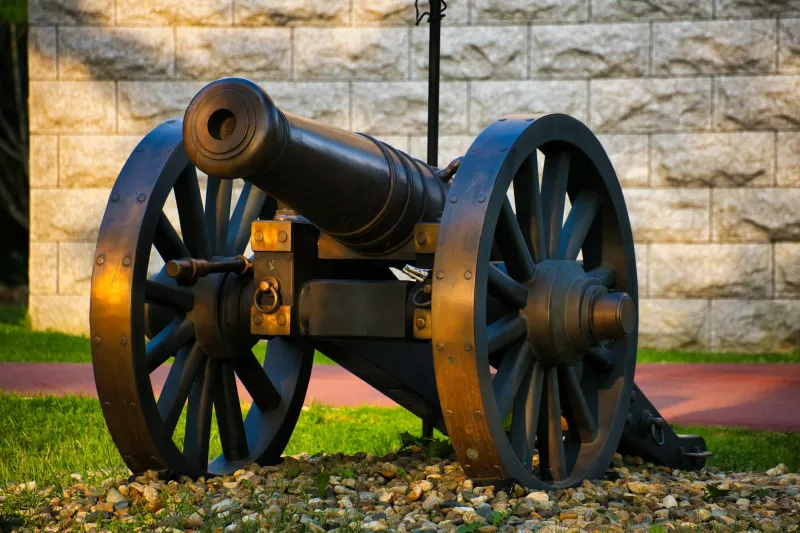
Picture this: It's 1891, and somewhere in the drought-stricken plains of Texas, a group of serious government officials are loading cannons with the solemn determination of soldiers preparing for battle. Their enemy? The sky itself. Their weapon? Pure, unadulterated explosive force. Their mission? To literally blow rain out of the clouds.
This wasn't some backwoods experiment or the fever dream of a desperate farmer. This was official United States policy, funded by Congress and backed by what passed for science in the 1890s. The federal government had declared war on drought, and their battle plan involved more gunpowder than a Fourth of July celebration.
The Theory That Somehow Made Sense to Lawmakers
The idea behind "pluviculture" — yes, that's what they actually called it — was surprisingly simple for something so spectacularly wrong. Scientists of the era noticed that rainfall often followed major battles, leading them to conclude that the concussive force of explosions could literally shake rain loose from reluctant clouds.
It was the kind of logic that sounds almost reasonable until you think about it for more than thirty seconds. But in an age when meteorology was still in its infancy and desperation ran high across America's agricultural heartland, even the most outlandish theories could find believers in high places.
The theory gained momentum when a Civil War veteran named Daniel Ruggles published research claiming that major battles consistently produced rainfall within hours of the fighting. Never mind that correlation doesn't equal causation — Congress was ready to fund anything that promised relief from the devastating droughts plaguing the American West.
When Farmers Became Artillery Officers
The program officially launched in 1891 under the direction of Robert Dyrenforth, a patent lawyer turned government rainmaker. Congress allocated $20,000 — roughly $600,000 in today's money — for what would become known as the "Dyrenforth Expeditions."
The setup was elaborate and absurd in equal measure. Teams hauled massive mortars into the Texas plains, accompanied by weather balloons filled with explosive charges and enough dynamite to level a small building. The plan was to create a coordinated bombardment of the atmosphere, timing explosions to maximize their supposed rain-inducing potential.
Local farmers, desperate for any hope of relief, embraced the program with surprising enthusiasm. They volunteered their land for the experiments and even helped transport equipment across the dusty plains. After all, what did they have to lose? Their crops were already dying.
The Spectacular Failure Heard 'Round the Plains
The first major test took place near Midland, Texas, in August 1891. For three days, Dyrenforth's team unleashed hell on the heavens. Cannons boomed across the prairie. Dynamite-laden balloons exploded overhead. The noise was deafening, the spectacle was impressive, and the results were... absolutely nothing.
Well, that's not entirely true. The explosions did produce results — just not the ones anyone hoped for. The concussive blasts shattered windows in nearby towns, terrified livestock for miles around, and created a cloud of smoke so thick it blocked out the sun. But rain? Not a single drop.
Undeterred by this minor setback (and apparently immune to irony), Dyrenforth declared the experiment a partial success. After all, he argued, they had created artificial clouds — never mind that they were made of smoke and gunpowder rather than water vapor.
Congress Doubles Down on Destruction
Any reasonable government might have taken the hint and quietly shelved the program. But this was 1891, and drought-stricken constituents were demanding action. Instead of admitting defeat, Congress actually increased funding for the rainmaking experiments.
The program expanded to multiple states, with teams conducting explosive weather modification attempts across the drought-affected regions. Each failure was met with explanations about atmospheric conditions, timing issues, or insufficient explosive force. The solution, according to program advocates, was always more dynamite.
Newspapers began covering the expeditions with barely concealed amusement. Editorial cartoons depicted Uncle Sam firing cannons at bewildered clouds, while skeptical scientists pointed out the obvious flaws in the underlying theory. But the political pressure to "do something" about the drought kept the funding flowing.
The Rain Dance That Actually Worked
The most embarrassing moment came during a 1892 expedition when Dyrenforth's team spent an entire day bombarding the sky without producing so much as a wisp of moisture. That evening, a group of local Native Americans performed a traditional rain dance as a gesture of goodwill toward the visiting government officials.
It rained that night.
The irony was lost on exactly no one, including the local newspapers that gleefully reported how indigenous traditions had succeeded where federal explosives had failed. The story became a nationwide sensation, effectively ending public support for the cannon-based weather modification program.
The Legacy of America's War on Weather
By 1893, even Congress couldn't ignore the mounting evidence that exploding things at the sky was neither scientific nor effective. The program was quietly discontinued, though not before burning through nearly $50,000 in taxpayer funds — money that could have provided actual drought relief to struggling farmers.
The Dyrenforth Expeditions became a cautionary tale about the dangers of mixing desperation with pseudoscience. They also provided early lessons about the importance of peer review and the scientific method — lessons that apparently needed to be learned the hard way, with cannons.
Today, cloud seeding is a legitimate (if limited) weather modification technique that uses silver iodide particles rather than explosive force. Modern meteorologists can actually influence precipitation under the right conditions, proving that the basic goal wasn't entirely crazy — just the method of achieving it.
The next time someone suggests that the government wastes money on ridiculous projects, remember that Congress once funded a multi-year program to attack the weather with artillery. Suddenly, those $600 toilet seats don't seem quite so outrageous.