Uncle Sam's Wildest Real Estate Deal: Free Land in Alaska (Bears Not Included)
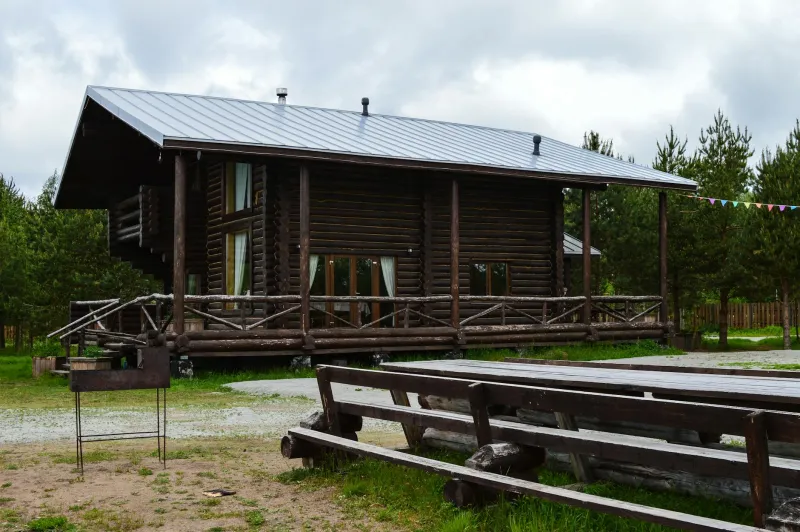
The Government's Most Generous Offer Ever
In 1964, the United States government made an offer that sounds too good to be true: move to Alaska, build a house, and get 160 acres of pristine wilderness absolutely free. No down payment, no credit check, no HOA fees — just pack your bags, survive five years in one of the world's most unforgiving environments, and the land was yours forever.
Thousands of Americans took the deal.
The Alaska Homestead Program was the federal government's last hurrah for westward expansion, a throwback to the 19th-century policies that had populated the Great Plains. But instead of prairie grass and manageable winters, these modern pioneers faced permafrost, grizzly bears, and temperatures that could drop to 60 below zero.
The Fine Print Nobody Read
The government's pitch was seductive in its simplicity. Applications were processed through the Bureau of Land Management, and successful applicants received a deed to their plot after meeting just a few basic requirements: build a habitable dwelling, clear and cultivate a portion of the land, and live there for at least seven months of each year for five consecutive years.
What the bureaucrats in Washington didn't emphasize was that "habitable dwelling" had to be constructed in a place where the nearest hardware store might be 200 miles away, accessible only by bush plane or dog sled. Or that "clearing land" often meant removing trees with trunks three feet across using nothing but hand tools and determination.
The government also failed to mention that groceries cost three times what they did in the Lower 48, that medical emergencies required helicopter evacuation, and that the wildlife included creatures that could kill you in dozens of creative ways.
The Optimists Who Actually Went
Despite the challenges — or perhaps because of them — the program attracted a remarkable cross-section of American dreamers. There were Vietnam veterans seeking peace and solitude, back-to-the-land hippies convinced they could live off the grid, and middle-class families tired of suburban conformity.
The Johnson family from Ohio epitomized the homesteader spirit. Bob Johnson was an accountant who'd spent 15 years in Cleveland cubicles before deciding his three kids needed to learn what real freedom looked like. In 1967, he loaded his wife and children into a station wagon and drove 3,000 miles to claim their 160 acres near Fairbanks.
Their first winter, the family lived in a canvas army surplus tent while Bob built their cabin. The temperature hit 45 below in January, and they heated their shelter with a wood stove that required feeding every two hours to prevent freezing to death. Bob's wife, Martha, later wrote in her diary that she spent that entire winter wondering if they'd made a terrible mistake.
But they survived, and by spring, something had changed. The kids had learned to identify animal tracks, start fires, and navigate by the stars. Martha had discovered she could shoot a moose at 100 yards and butcher it herself. Bob realized he hadn't thought about traffic jams or office politics in months.
The Reality Check
Not everyone adapted as successfully as the Johnsons. The dropout rate was staggering — some estimates suggest that 80% of homesteaders abandoned their claims before the five-year requirement was met. The reasons varied, but they usually boiled down to the same basic problem: Alaska was exactly as wild and unforgiving as advertised.
The Peterson family from California lasted exactly six weeks. They arrived in August with camping gear and optimistic attitudes, planning to build their cabin before winter set in. But they hadn't accounted for the clouds of mosquitoes that made outdoor work nearly impossible, or the fact that their chosen plot was mostly swampland that couldn't support a foundation.
When their youngest child developed pneumonia in early October, they faced a choice between a dangerous emergency flight to Anchorage or treating the illness themselves with whatever medical supplies they'd brought. They chose the flight and never came back.
The Ones Who Stayed
The families who succeeded often developed an almost mystical relationship with their land. They learned to read weather patterns in cloud formations, to preserve meat through the brief summer months, and to find entertainment in 20-hour winter nights without television or internet.
The Williams family, originally from Detroit, became legendary in their region for their ingenuity. When their generator broke in the middle of winter, they rigged a bicycle to power a small electrical system. When they ran out of coffee, they learned to make a passable substitute from roasted dandelion roots. When their son needed appendix surgery, they built a landing strip on their property so the medical evacuation plane could reach them.
By the time they earned their deed in 1973, they had become completely self-sufficient. They grew most of their own food, generated their own power, and rarely left their property except for the occasional supply run to town.
The Program's Strange Success
The Alaska Homestead Program officially ended in 1986, making it the last homesteading program in American history. By then, roughly 3,500 families had successfully completed the five-year requirement and earned permanent title to their land.
Many of those original homesteads are still occupied today, often by the children and grandchildren of the original pioneers. What started as a government land giveaway evolved into thriving communities with their own schools, airstrips, and informal economies based on hunting, fishing, and seasonal tourism.
The town of Talkeetna, now famous as a base camp for Mount McKinley climbers, was largely populated by homesteaders who arrived in the 1960s and 70s. The quirky, independent culture that attracts visitors today was forged by people who chose to live without running water or electricity for years at a time.
The Last Frontier's Lasting Legacy
The Alaska Homestead Program represented something uniquely American: the belief that anyone willing to work hard enough could claim a piece of the wilderness and make it their own. It was probably the last time in U.S. history when the government offered citizens a genuine chance to disappear completely from modern society and start over from scratch.
The program's success rate might have been low, but its impact was profound. The families who stayed helped establish Alaska's reputation as a place where self-reliance wasn't just admired — it was essential for survival.
Today, when Americans complain about government red tape and urban overcrowding, it's worth remembering that just a few decades ago, Uncle Sam was literally giving away vast tracts of pristine wilderness to anyone brave enough to take them.
The catch, of course, was that you had to be tough enough to keep them.